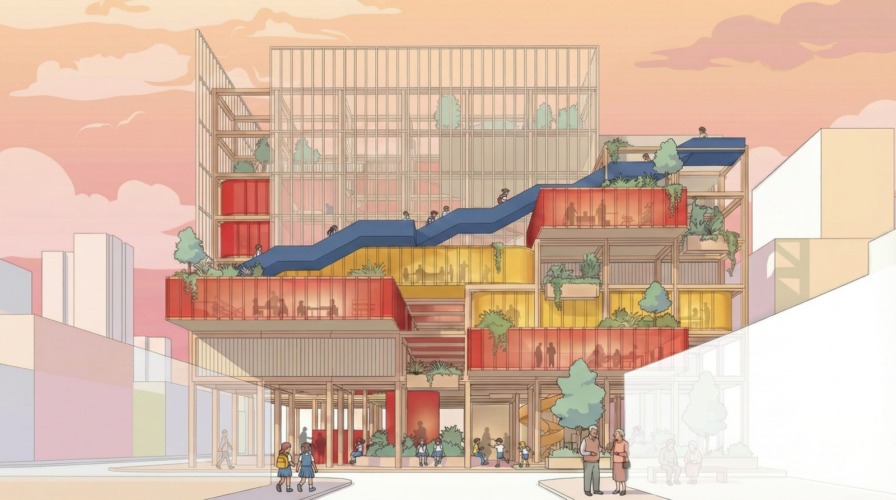
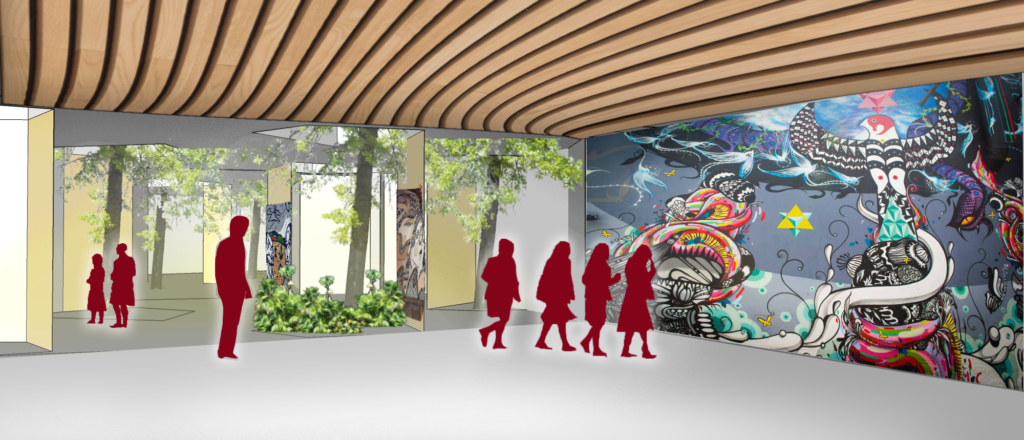
Filter by Studio

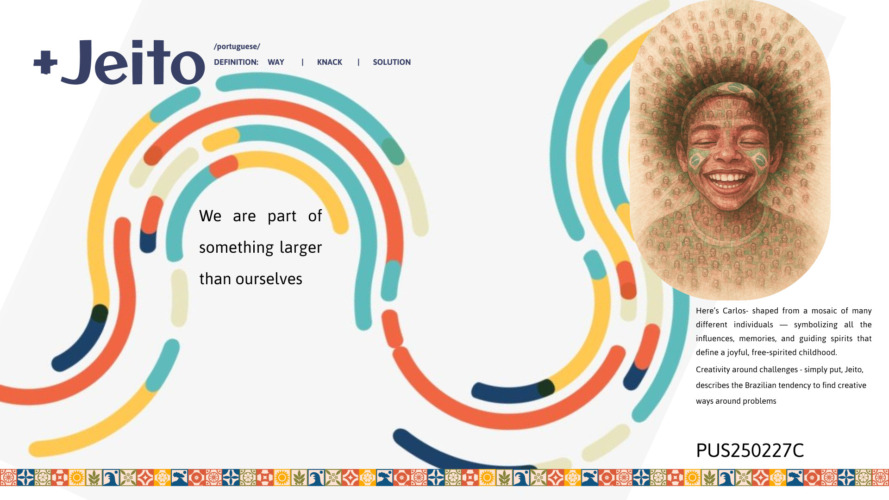
+Jeito

Myrna J, Samiksha Gadodia, Divya Dharshni, Krish Desai
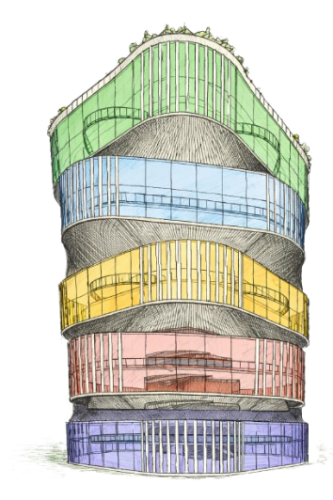
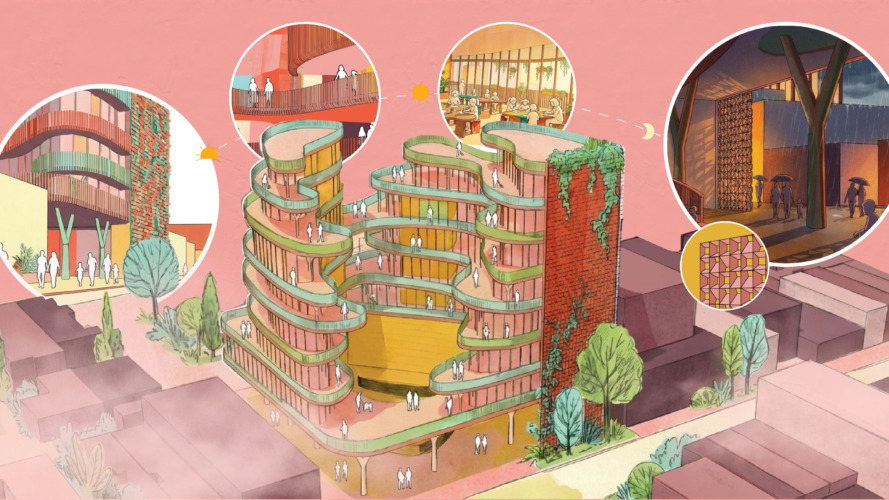
JEITINHO BRASILEIRO – to find a way – is a term that describes the Brazilian tendency to find creative ways around challenges.

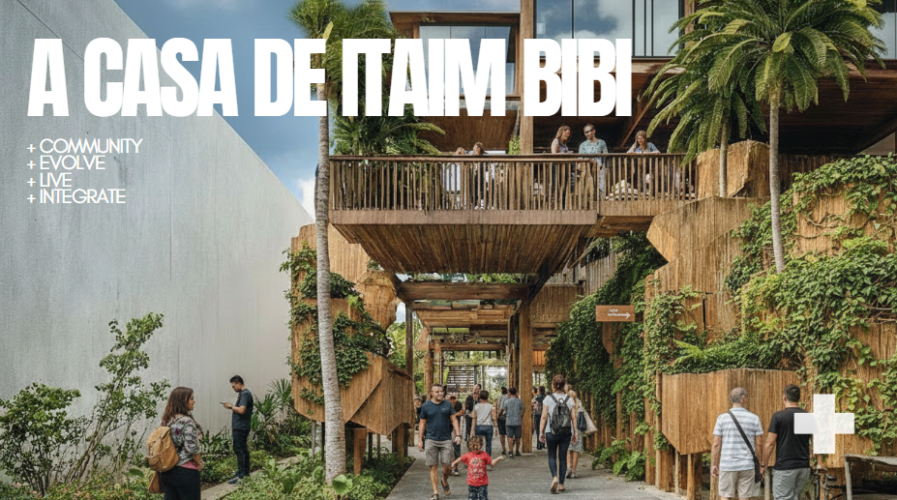
A Casa de Itaim Bibi

Sara Albayyari, Jina Sirriyeh, Sara Yaish, Mirag Safi
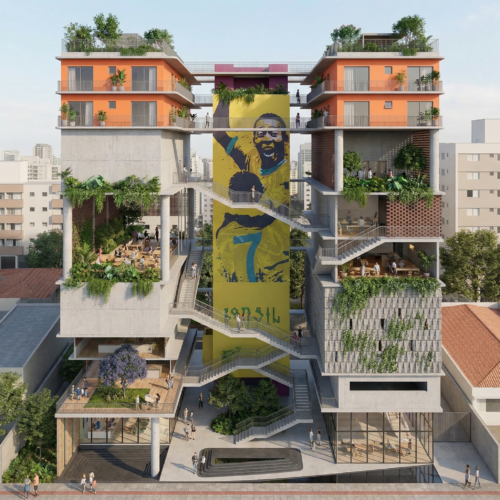
A CASA DE ITAIM BIBI is a 24‑hour community learning hub in São Paulo, inspired by the Indigenous Maloca, uniting education, housing, work, and civic life into a shared, lifelong right.

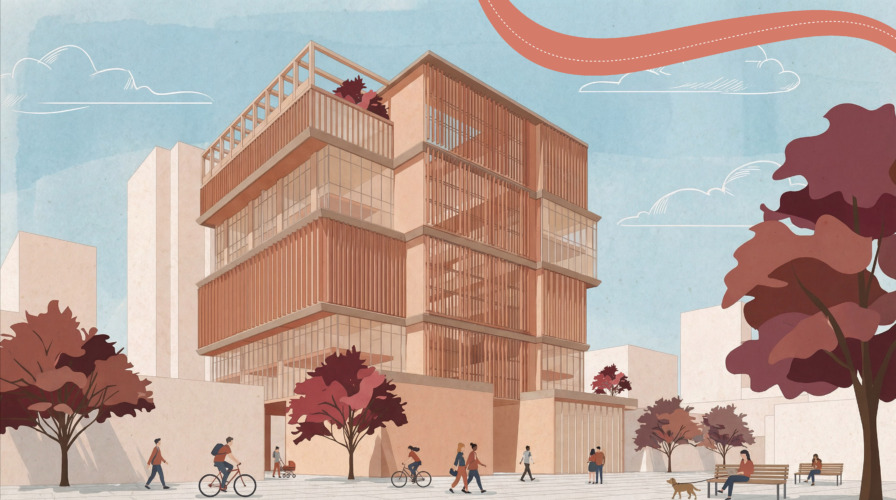
A City Within

Majed Ibrahim, Marwa Omar, Noha ElAttar
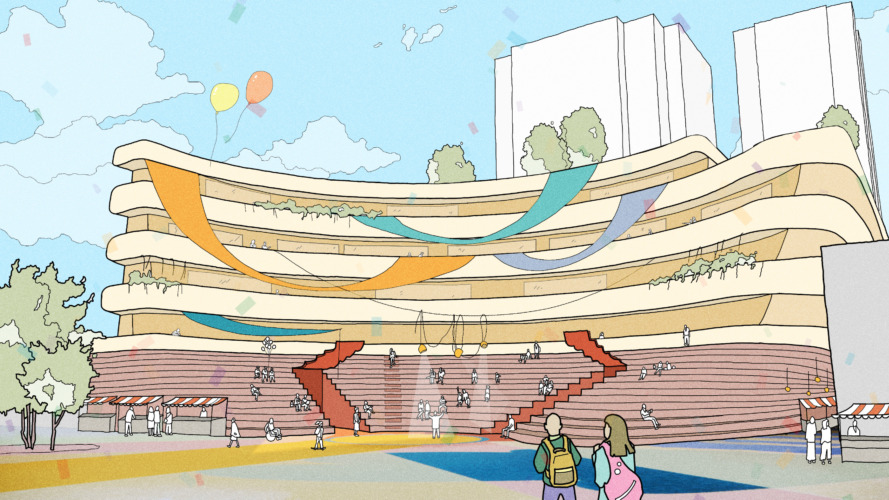
The school becomes a vertical extension of the city where streets turn into learning spaces and public life continues inside. A porous civic structure connects education and community, transforming the building into a living urban ecosystem.

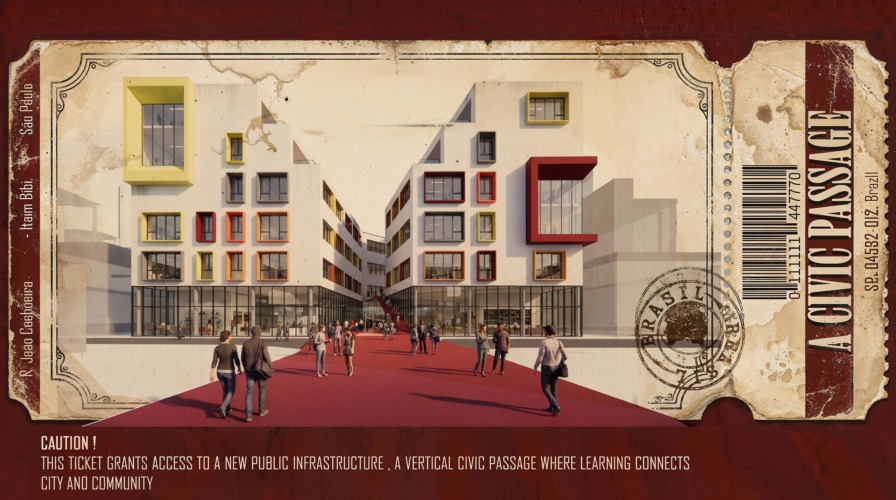
A Civic Passage

Samia Noaman, Wissam Ayman, Seif Ghobrial
The Civic Passage turns the school into a public spine, connecting streets, programs, and communities, transforming circulation into shared learning space and flexible civic hub from ground floor to rooftop.

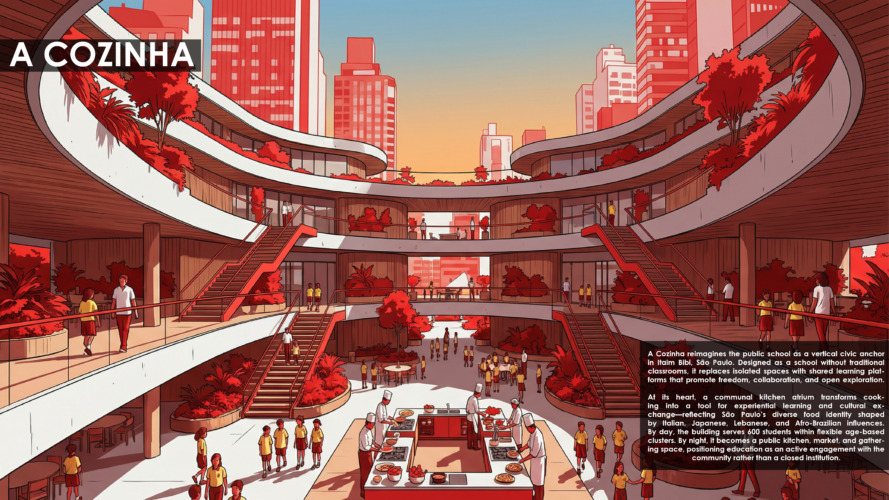
A Cozinha

Ahmed Zaki, Abdullah Ashraf, antony ibrahim, Amr Gamal
A Cozinha reimagines the public school as a vertical civic anchor in Itaim Bibi, São Paulo, replacing traditional classrooms with shared learning platforms. Centered on a communal kitchen atrium, it links education, culture, and food through day‑to‑night use as a school, public kitchen, market, and gathering space.

A Parade of Pedagogy

Tamilselvan Ezhilmaran, Bharath Gopalakrishnan

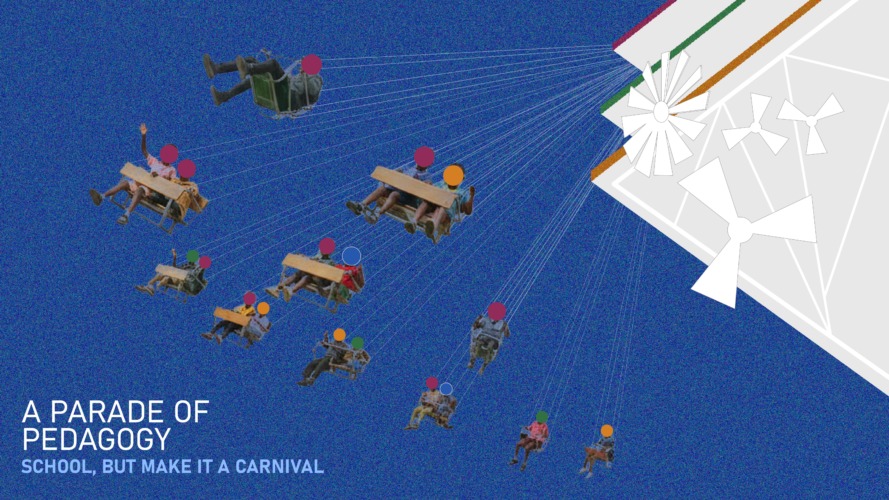
Learning+ that dances like in a carnival parade , from day to night and from summer to winter. A new academia for every students of different community.

ABCs A Beautiful Community School

Josh Fisher, Diana Perez, Reza Takallouie, Tyrone Marshall
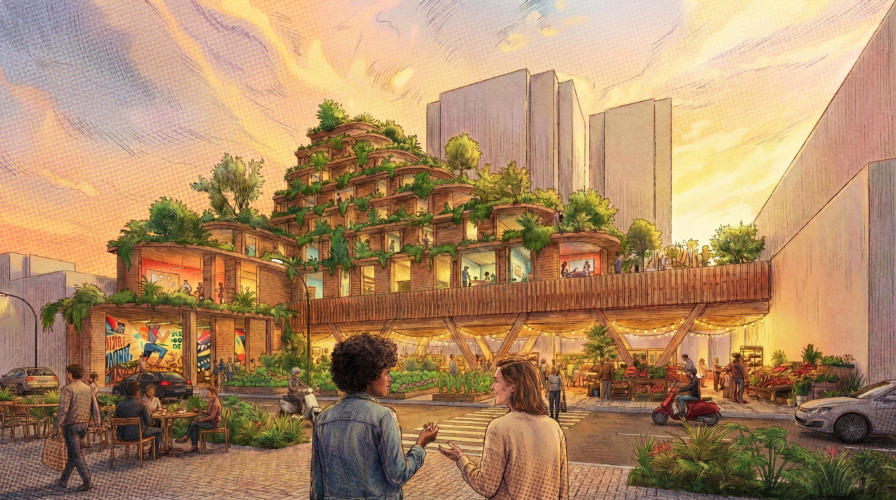
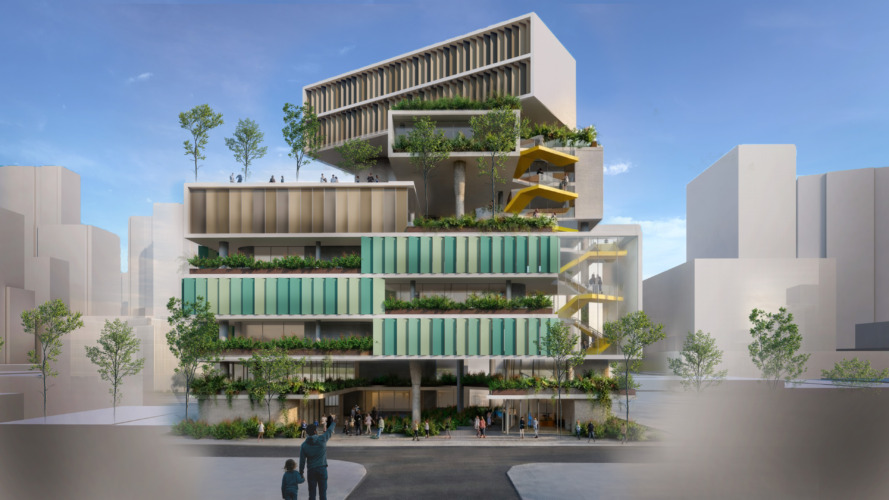
This project reimagines the urban school as vertical civic infrastructure—a 10‑story mass timber learning landscape serving students and community. Through biophilic design, natural light, and carefully crafted spaces, it nurtures well‑being, curiosity, and focus, placing beauty and nature at the heart of learning.

Agentes da Alegria

Angelina Zhang, Lizzy Dame, Mariama Kah, Navya Raju
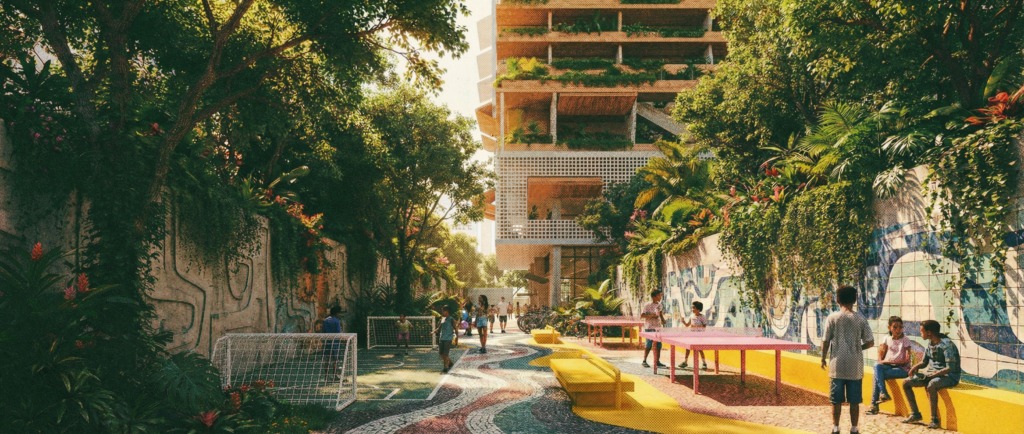
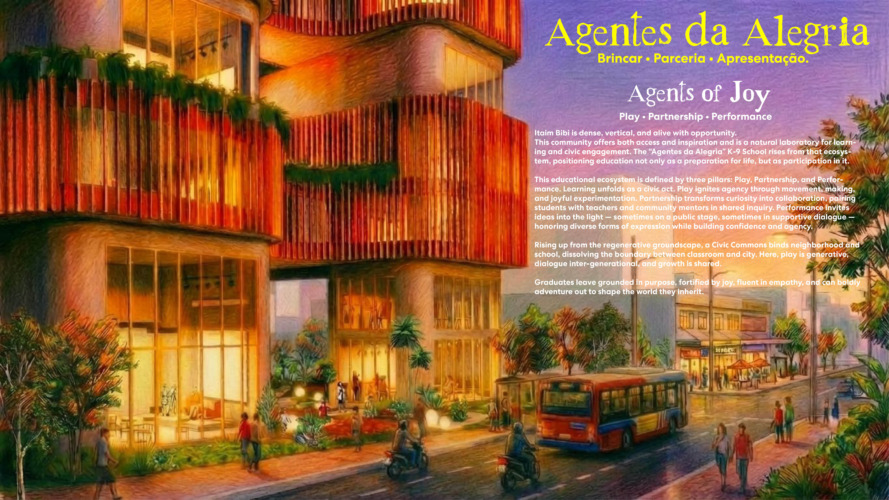
This school sees creativity as civic power, existing not to train workers but to cultivate self‑actualized humans. Students grow confident, curious, and resilient, able to understand systems, collaborate meaningfully, and engage their community—beginning and ending their learning journey with joy.

Água de Beber

Aram Guzman, Marlen Lopez, Derrick Tang, Elijah Montez

São Paulo built its future on a river it forgot. This school returns to it. The Pinheiros is both wound and teacher — a record of what was sacrificed, and the beginning of a different education: one that believes Brazil’s leadership in the world flows not from the conquest of nature, but from a generation learning, in communion with land and water, to repair what their city left behind.

Beyond the Bell | Além do Sinal

Lily Zhao, Maggie Lee
From Brazil’s dual-shift public school reality to a 24-hour civic learning ecosystem for everyone.

Block Party

Dominic Blindert, Madelaine Murray, Tom Godinez, Elliot Langejans

In a district defined by office towers, exclusive education and private amenities, The Block Party reimagines Itaim Bibi as a catalyst for knowledge exchange through its radical, yet simple vertical public commons. The project’s stacked massing recalls the simplicity of building blocks, expressing education as incremental, foundational, and collectively constructed over time.

Building Blocks

Paola Hanna, Marie Christine Dimitri

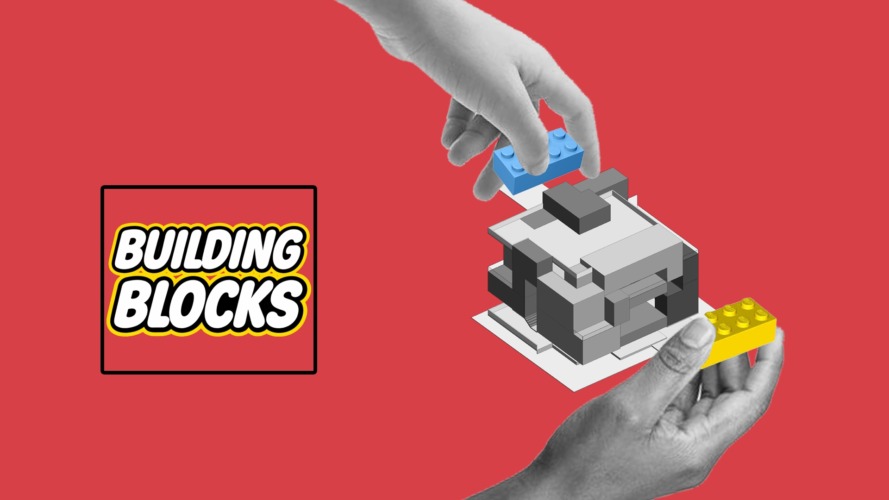
Between child and adult, space breathes, connection, and imagination unfold. A threshold of generations where walls fade and worlds are shared. Here, play shapes space, and connection turns footsteps into stories.

Casa Commune

Ninoshka Menezes, Sweta Haldar, Lokesh Cheripally, Varsha Padmanabhan

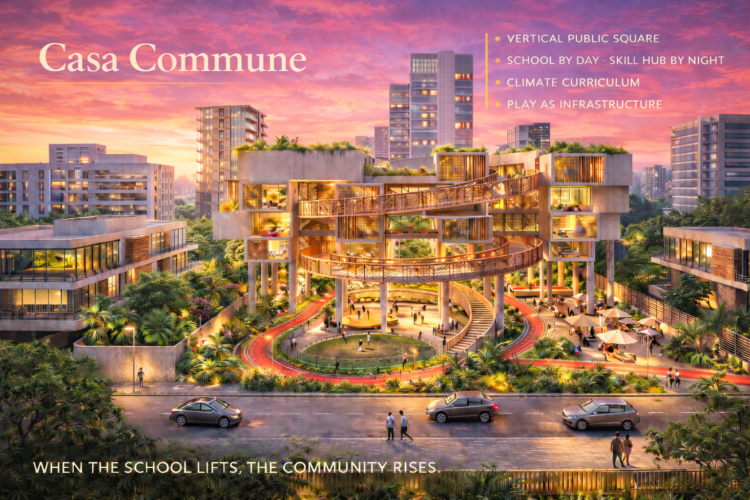
Casa Commune is not a school you enter, it is a city you climb. A vertical public square where learning spirals upward, play becomes infrastructure, and the ground belongs to everyone. When the building lifts, the community rises with it.

Chão Comum

Neha Rampuria, Maithili Awasarikar, David Asokeji, Octavia Pinckney

Chão Comum is a radically transparent community hub that dissolves social barriers by integrating public urban life with holistic, 24/7 learning. It heals the urban fabric through bioclimatic design, providing a shared sanctuary where students, neighbors, and educators thrive together.

Circuito

Corey Phelps, Joshua Gripton, Jeff Moisant, Lin Chew

CIRCUTIO is a vertically organized school model built on data-informed feedback and inter-collegial mentorship. Supported by a self-sustaining AI infrastructure and a malleable ground plane, it operates as a subject-specific knowledge repository, a living pedagogical data model, and a civic anchor.

Convivência

Hailey Mulvey, Lisa LoGiudice, Tricia Gittings, Penelope Park
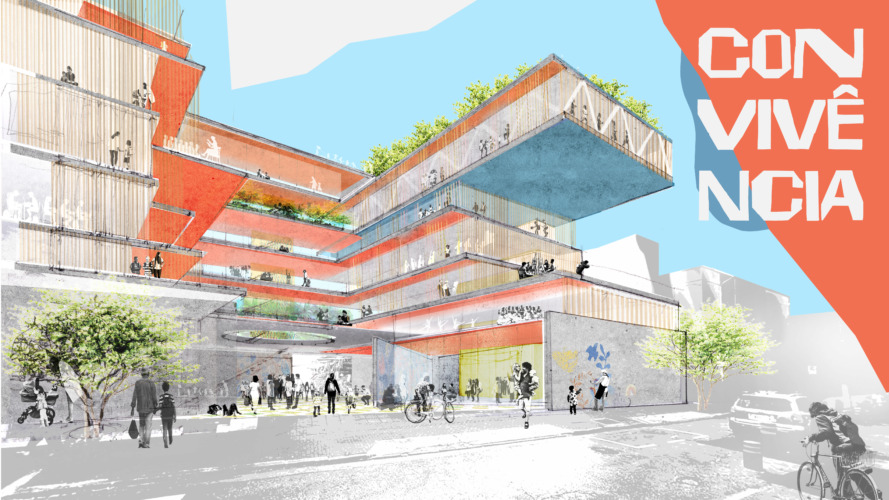
Rooted in Brazil’s concept of Convivência, this project transforms shared existence across generations into architecture. As an early education center and lifelong civic hub, it creates spaces where communities connect, sustain cultural memory, and continuously shape—and return to—their collective foundations.

Dopamine House

Abeer Mahmoud, Arunkumar Mariappan, Soni Johnson

THE DOPAMINE HOUSE: Itiam Bibi > “Reimagining the school as a living civic platform. By gamifying participation, we turn the act of learning into a visible neighborhood catalyst.”

El Verdebra

Nadia Abu Jbarah, Sanad Tell

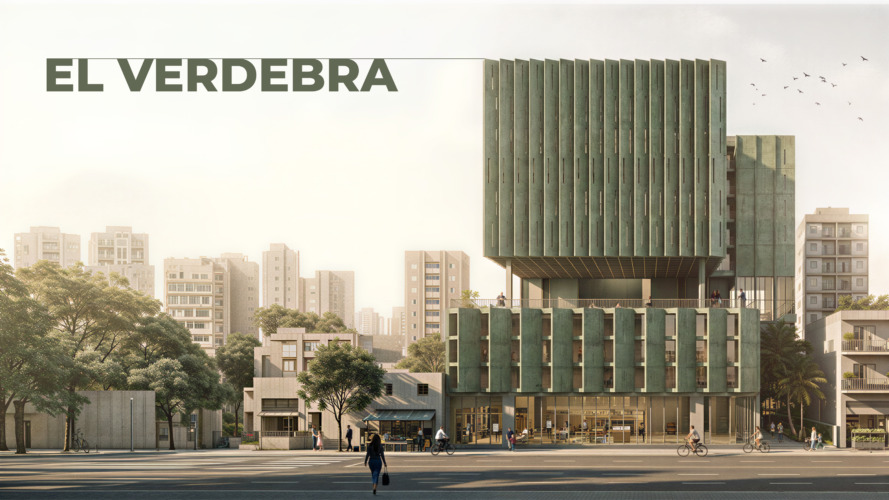
El Verdebra lifts the traditional school to liberate a porous public stage for São Paulo’s street culture. A reinterpretation of the city’s brutalist heritage as a vibrant green monolith; a resilient shell where education and civic life seamlessly merge.

Enlightment

Sofia Bojorquez, Valeria Salazar, Jacqueline Beltran Palomares

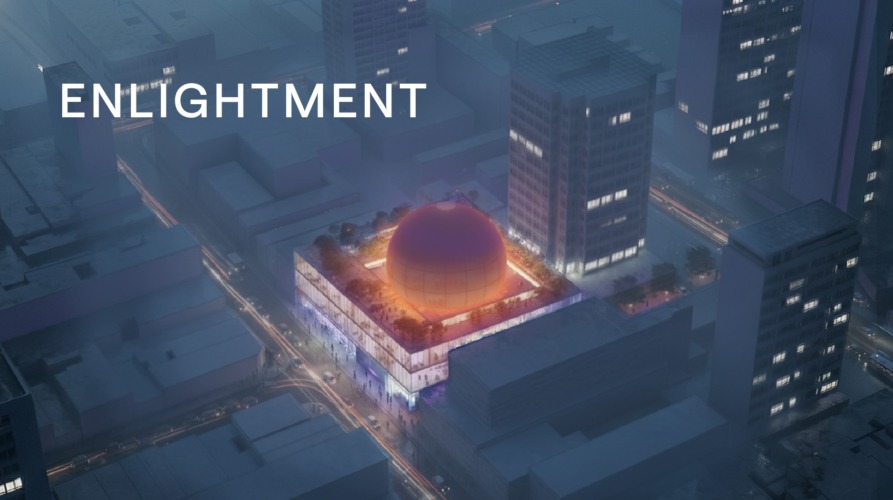
Enlightment is a civic-educational threshold in Itaim Bibi that balances São Paulo’s urban intensity with spaces for pause, reflection, and collective learning. It recognizes that true learning is a biological process, one that requires a deliberate equilibrium between activation and rest.

Enroute

Himshikhar Himshikhar, Salman Haider

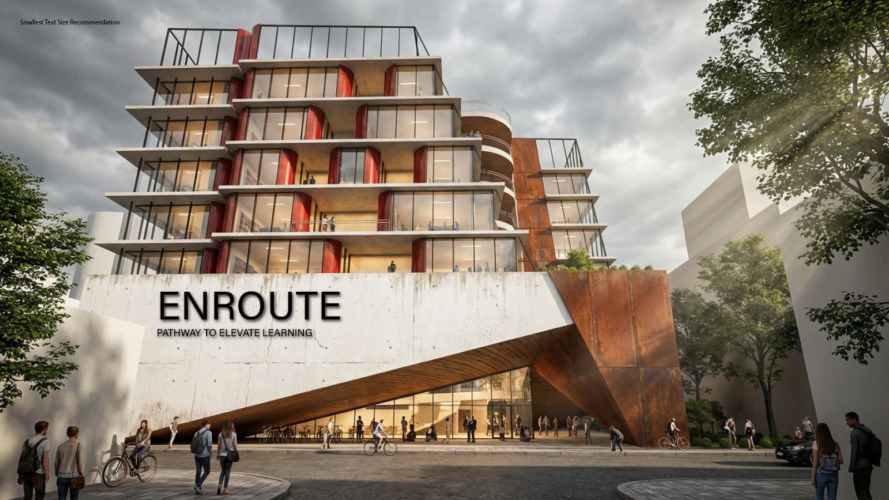
The building embodies a continuous architectural journey that elevates learning within a postmodern context.

Entre Telhados e Trilhas

Ryan Sison, Nicole Yip, Isa Branas, Kig Veerasunthorn
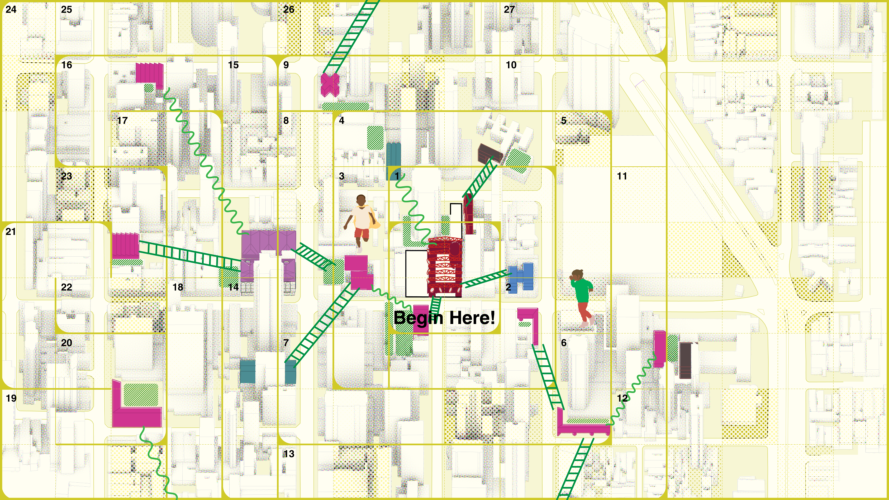
This proposal reimagines Itaim Bibi as a community‑anchored educational network embedded in the neighborhood’s social and economic fabric. Through a civic hub, rooftop activation, partnerships with local businesses, and an elevated green pathway, it creates reciprocal spaces where education, commerce, and community life reinforce one another.

Escola da Rua: School of the Streets

Sayed Salahuddin, Dhruv Krishnan, Aniket Sonawane, Dheeraj Rathod
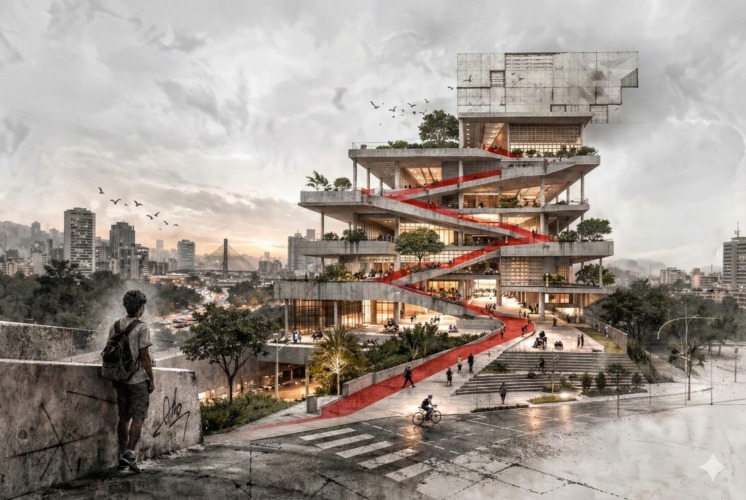
The project centers on a continuous vertical street that replaces the traditional corridor and classroom. Formed by a two‑lane ramp, it weaves through every level—balancing efficient movement with moments of pause—so circulation and learning merge into a single, integrated spatial experience.

Escola do Pertencimento

Ahmed Ashraf, Mostafa El-Bessy, Mostafa Zahran

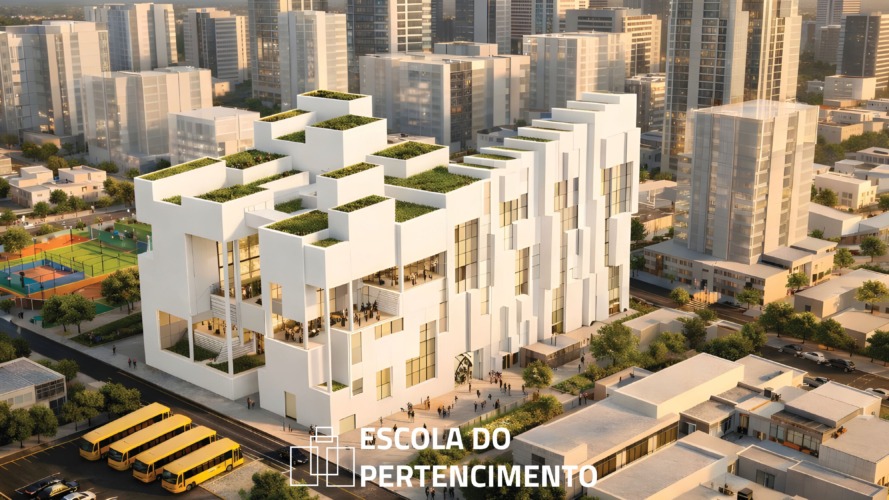
Escola do Pertencimento is a vertical pedagogy of belonging, empowering the underprivileged in a post-AI era by shifting education from content delivery to human capital development.

Escolaviva

Zeyad Ali, Hagar Elsrougy, Dena Ragab

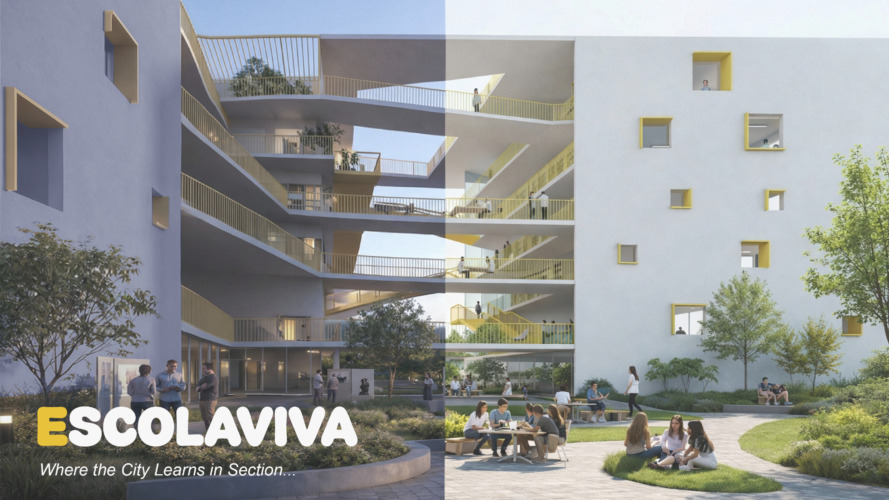
Escolaviva reimagines the school as a vertical civic promenade in which learning unfolds through section rather than plan. By stacking public life, culture, wellness, and academic space along a continuous upward journey, the building transforms circulation into pedagogy and the city itself into a classroom.

Espaço Potência

Olivia Harris, Krystofer Pinnock, Laura Garcia, Darius Magada-Ward

Located in São Paulo, where gender-based violence and economic disparity disproportionately impact women, this project proposes a public all-girls STEAM academy integrated with a community resource center as an architectural response to systemic inequity.

Farm to the Long Table

Lucy Kim, Stephanie Tong
The project positions food as a universal connector, addressing urban food insecurity by integrating a vertical farm with K–12 learning and community spaces. A continuous vertical Long Table unifies cultivation, education, and gathering, framing the building as a shared ecosystem of exchange, resilience, and nourishment.

Gambiarra

Georgy Karpenko, Ross Dowd, Rain Chan

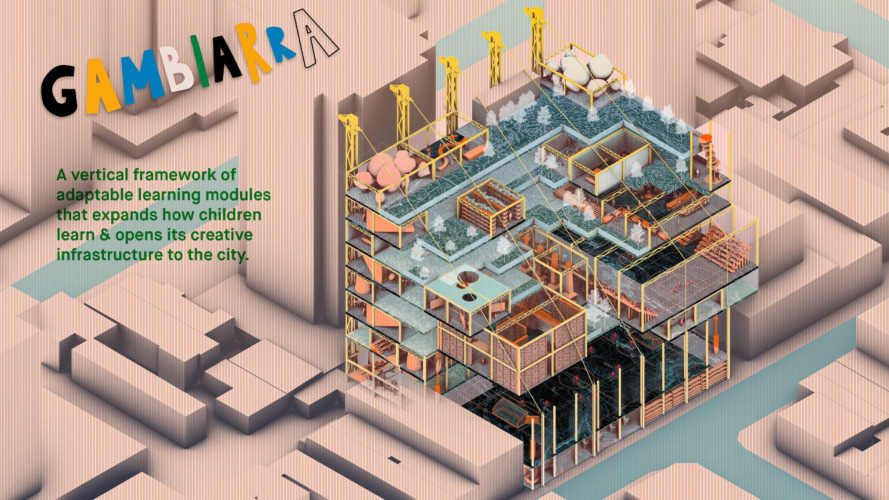
A vertical framework of adaptable learning modules that expands how children learn & opens its creative infrastructure to the city.

Gro[w]ve

Isaiah Lee, Andrew Bernard
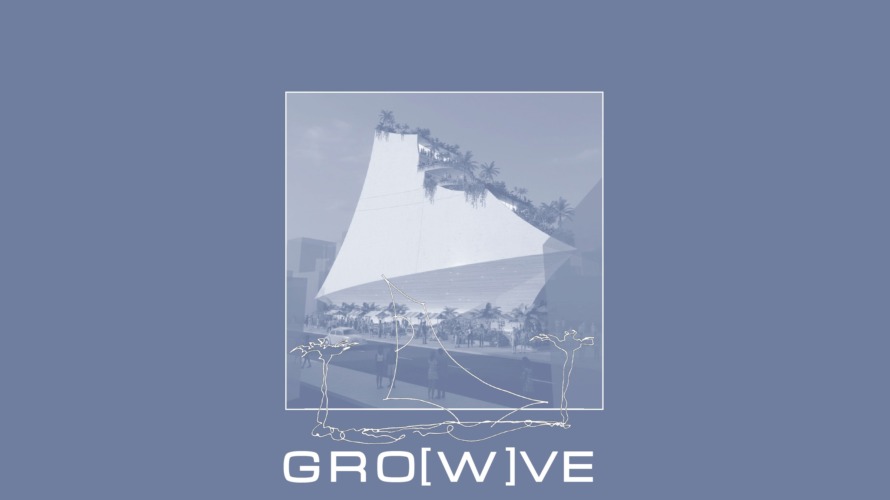
GRO[W]VE balances stable public spaces with flexible private learning environments, fostering consistent neighborhood engagement while supporting adaptable education. Fixed civic programs like the theater and library anchor the building, while playful, adjustable classrooms connect into them, accommodating varied ages, activities, and teaching styles.

Human Nurture

Anna von Euw, Megan Stenftenagel, Gabriella Poncet, Bryce Stanger

‘HUMAN NURTURE’ celebrates learning grounded in human-centered connection within a tech-driven densifying environment to reconnect youth, the aging population and the working adult in a way that nurtures sensory-based interaction and fosters a strong sense of identity and belonging in a growing and changing world.

Ibirapuera No Ar

Boyu Hu, Kaikang Shen, Jessica Guimaraes

Ibirapuera no ar reimagines the spatial logic of Parque Ibirapuera as a vertical public landscape, where education and civic life are layered within a single structure. In one of São Paulo’s densest neighborhoods, the school becomes elevated terrain — a place where learning, culture, and community rise together.

Imaginação – A Cognitive Journey

Mariam Khadrawi, Soad Shahin, Logaina Fathalla, Engy Eldamarawy

IMAGINAÇÃO responds to São Paulo’s intensity and density by structuring the school as a cognitive journey through five stages of imagination; Curiosity, Exploration, Experimentation, Reflection, and Expression. Translating the neurological process of creativity into space, the project guides ideas from internalized wonder to a collective, public release, transforming imagination into an active urban force.

In Clouds We Belong

Qiyang Xu, Yubo Ji

Learning is inseparable from the city—it happens in streets, plazas, and public life as much as in classrooms. This project makes education civic, suspending collaborative learning pods within a vertical framework that connects students, teachers, and the public in continuous, shared experience.

Intellect in Common

Karthick Muthumalai, Niranjan Kannathasan, mohamed irfan, Gajesh kumar Ravikumar

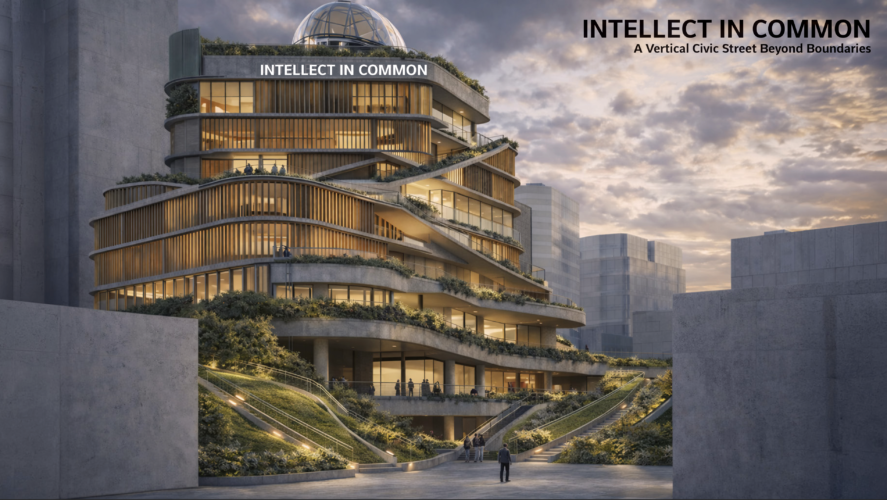
This Learning+ school provokes intellectual curiosity by merging culture, community, and technology within a vertical civic ecosystem. Every space is designed to stimulate thought, cultural exchange, and intergenerational learning—transforming the school into a living cultural engine.

Ive

Hazem Abdulkariem, Ahmed Fayed, Magdy Mekawy
Located in São Paulo’s fast‑growing Itaim Bibi district, the project introduces the area’s first bicycle–pedestrian cross passage to reduce congestion and car dependency. Integrating exhibition space and a flexible community hall, it transforms mobility infrastructure into a social connector supporting sustainability, education, and neighborhood engagement.

Jeitinho

Kelsey Mitchell, Sean Spencer, Jett Misuraca, Evanthia Constantinou
This project combines education, housing, and community infrastructure into a vertical learning ecosystem linking school, home, and city. K–12 education is supported by shared civic amenities, circular sustainability systems, intergenerational housing, and vocational pathways—embedding choice, collaboration, and stewardship into daily life and learning.

Kaleidoscope Of Voices

Sakshi Kedia, Sumit Sharma, Vishal Laghate

Like a kaleidoscope, the school unites diverse voices, histories, and talents into one dynamic, evolving community. It is not just a building, but an open civic framework where transparency, connection, and shared participation shape collective learning.
Keep It Street

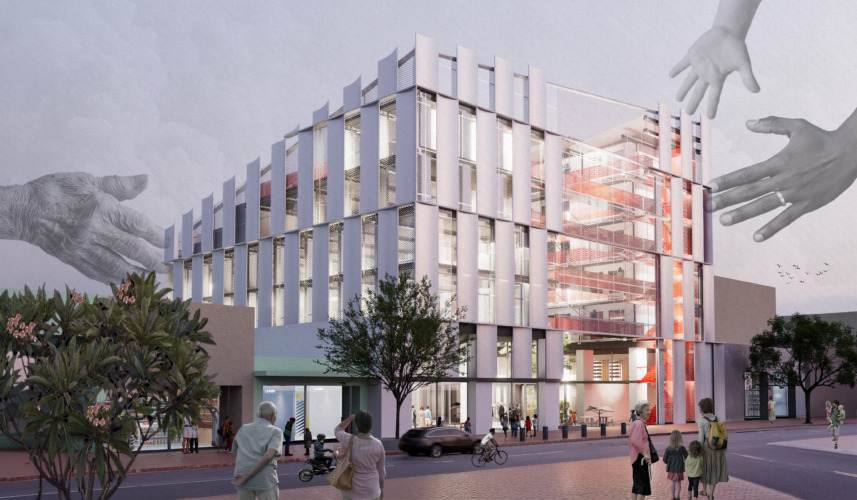
Helena Christensen, Jingping Lu, Mustafa Erkus

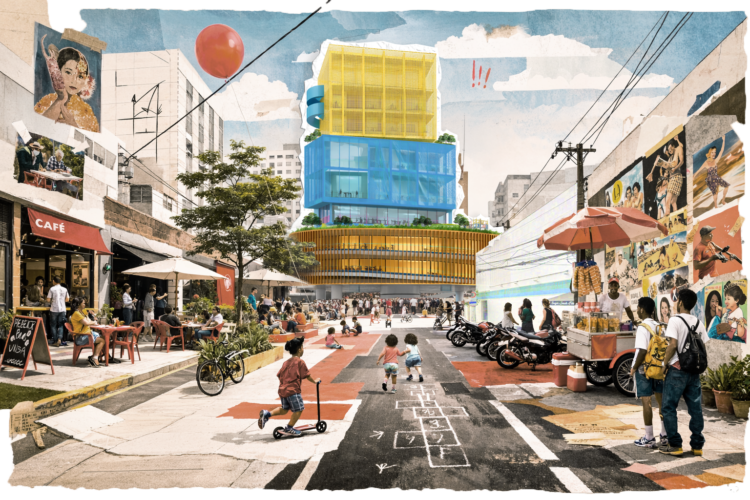
Keep It Street carries this educational shift beyond the building, reclaiming the city as a living classroom in the age of AI. As learning returns to the power of interaction, it calls for civic acts of learning that can transform everyday encounters into a reawakening of the street level of Itaim Bibi.

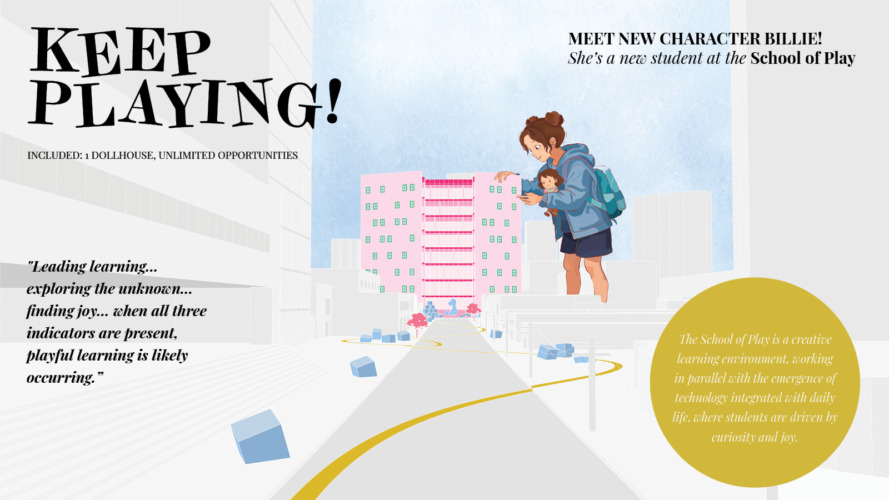
Keep Playing

Mouna Lawrence, Johanna Thiger, Thao Truong, Allyson Holley

The School of Play is a creative learning environment working in parallel with the emergence of technology integrated with daily life, where students are driven by curiosity and joy. This K-12 program is an homage to the doll house, a small-scale world that transcends identity and culture, children can mimic, react, communicate and create.

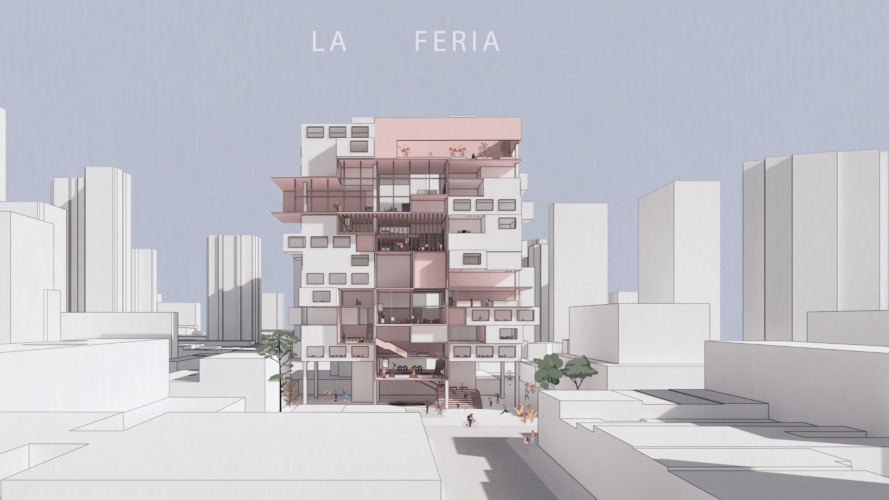
La Feria

Josh Padgett, Amir Heydarpour

In Brazilian culture, the open-air street fair—La Feria—is more than a marketplace; it is a vibrant social ecosystem where communities exchange knowledge, traditions, and lived experience. Reimagined as a new model for a new school, the feria becomes a community-embedded classroom that grounds learning in real-world participation, intergenerational exchange, and everyday life.

Learning In Between

Abubakr Bajaman, Nicole Leng, William Guinane

This unconventional Kindergarten to 6th grade school reimagines education by dissolving traditional boundaries. Driven by the concept of learning in the “between” spaces, the project integrates student education with shared civic engagement, transforming the campus from an isolated institution into a porous, 24-hour civic hub.

Learning+ A Vertical Civic Anchor

Mhammad Zein Al Chidiac, Ibrahim Alaywan
LEARNING+ reimagines the public school as vertical civic infrastructure embedded in the city. Layered programs, street‑level learning kiosks, and ascending academic spaces form a compact educational ecosystem, unified by a civic canopy and Brutalist principles of structural clarity, material honesty, and public generosity—supporting a visible, 24‑hour culture of learning.
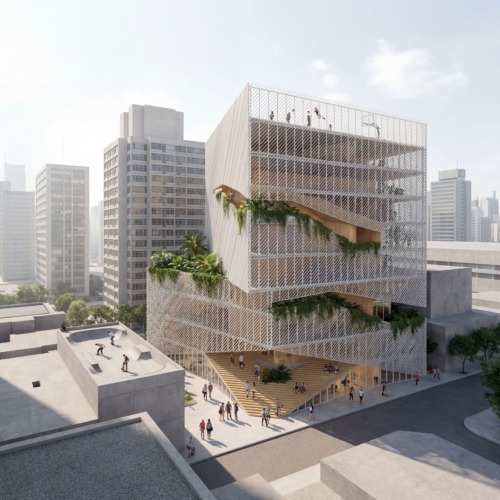
LinkPlus+

Lana Muhtaseb, lujain ghannam, Ahmad Turani, tarq alrashdan

LINKPLUS+ transforms the school into a living urban platform that dissolves the boundary between education and the city, activating learning as a shared, public experience. By connecting Gen Beta’s digital fluency with Gen X’s lived wisdom, the project creates a knowledge infrastructure where generations co-evolve through collaboration, technology, and community.

Mão Dada | Hand in Hand: The City as Classroom

Swapnil Porkute, Mahek Ubhrani, Shrutika lakhe, Wahid Devra

We propose a vertical learning exchange in Itaim Bibi that transforms commerce into curriculum and redefines education as civic infrastructure. By embedding live workshops within an academically structured environment, the building becomes economically self-sustaining, socially integrated, and centered on collective growth — because no one moves forward alone.

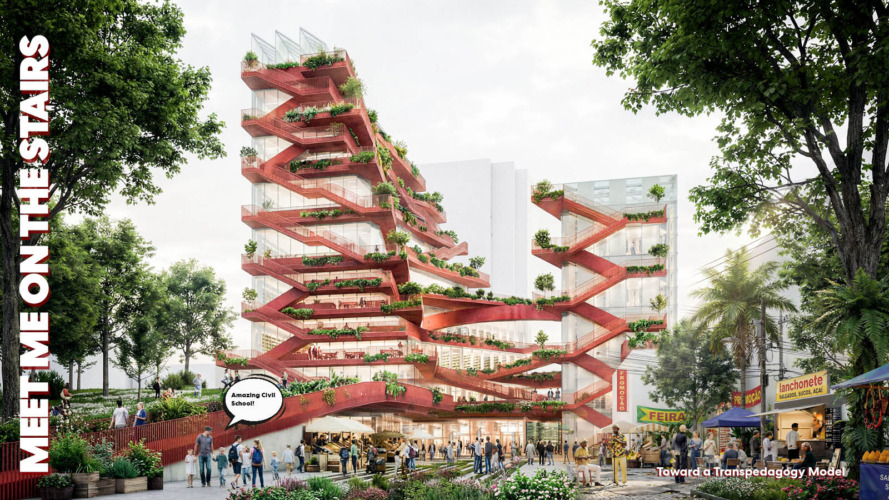
Meet Me on the Stairs

Nicolas Pinzon, Yuanxun Xia

Meet Me on the Stairs” replaces the rigid “Banking Model” with a replicable vertical strategy that transforms compact footprints into a porous, 24-hour stage for transpedagogical dialogue.

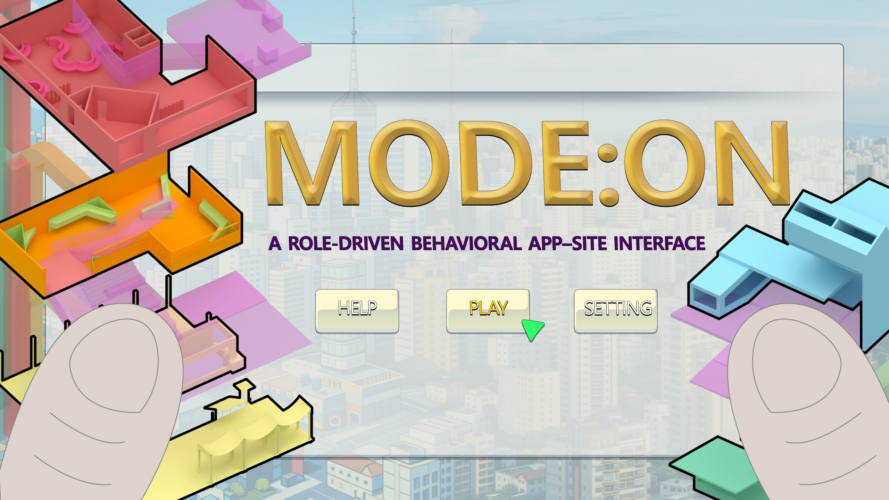
Mode:On

Wei Cai, Yixuan Cai

Through research on contemporary learning paradigms, traditional social roles are reinterpreted and projected into five future-oriented learning identities. These roles are no longer defined by profession or age, but emerge as behavioral prototypes shaped by technological transformation and evolving modes of social collaboration. Together, they construct the organizational logic of space and reshape the structures of learning and social interaction.

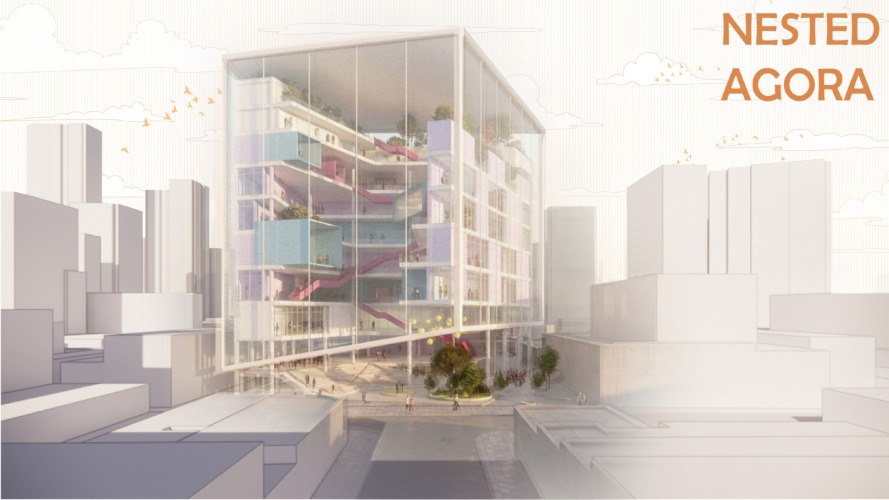
Nested Agora

Veronica Paulon, Saba Abdolshahi, Ariel Morales-Pearson

Nested Agora is a day-and-night school that reimagines the conventional layout of educational facilities, organizing learning into four concentric categories engagement, observation, creation, and listening. In typical shared buildings, civic functions are often pushed to the periphery. Nested Agora flips this paradigm: flexible spaces adapt to the city’s daily rhythms—morning, afternoon, and after office hours—inviting the public to occupy and activate central, prime areas.

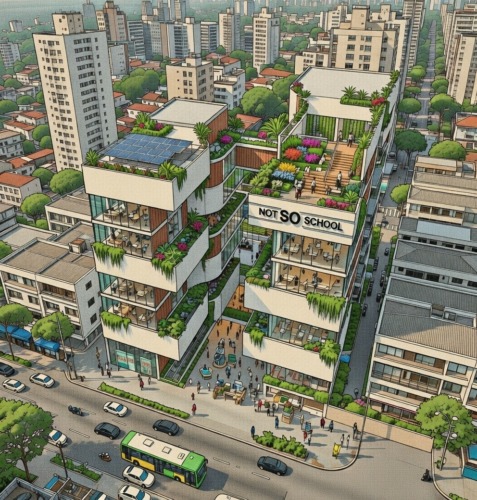
Not So School

Mrinalini Salvi, Gaurav Patankar, Akash Jagtap, Milland Mohanta

Two parallel lines — School and Society. Do they remain apart, or do they meet? Through shifting perspective, the architecture becomes their point of convergence — a civic ground where learning and public life intersect.

Núcleo

Vivek Manoj, Aravind Parambil, Abhijith V.S, Muhamed Sabin

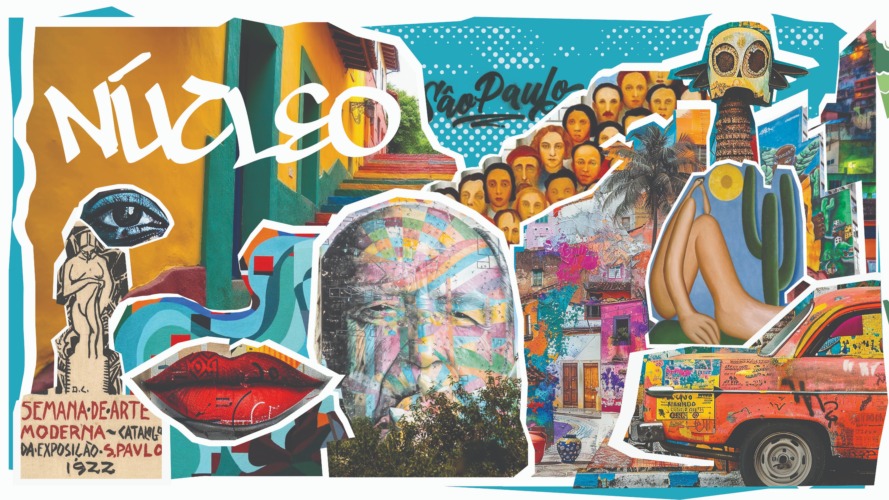
From missionary learning roots to ecological and social imbalance, São Paulo’s declining Tiete river mirrors the rise of inequality in education. Núcleo re-centers learning as an open, inclusive force, where AI, climate awareness, and equity restore both the river’s ecology and society’s balance.

Out of Line

Nabil Chebel EL Hachem, Samer Jurdak, Majd Younes, Ahmad Al Baltaji

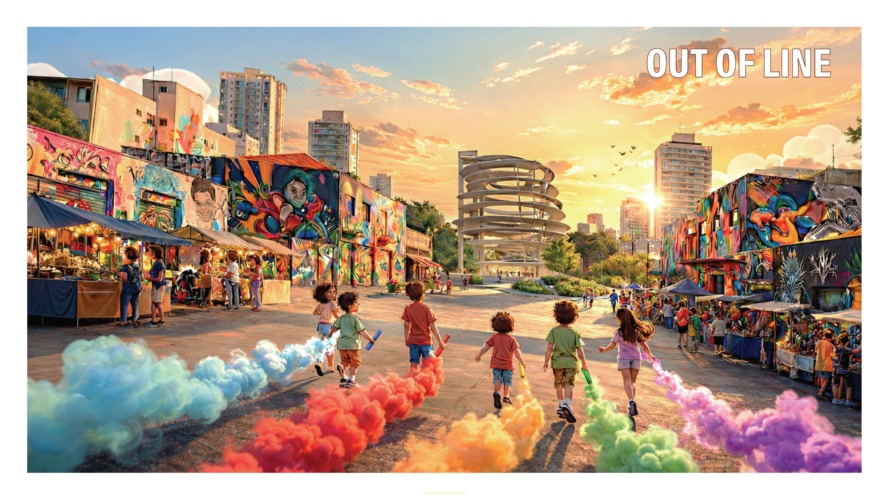
This is not simply an educational project. It is a recalibration of the urban narrative.

Passage of Generations

Daniela Salomé Martínez, Ana Ruelas, Nicole Matsui, Melisa Garza Jamesson

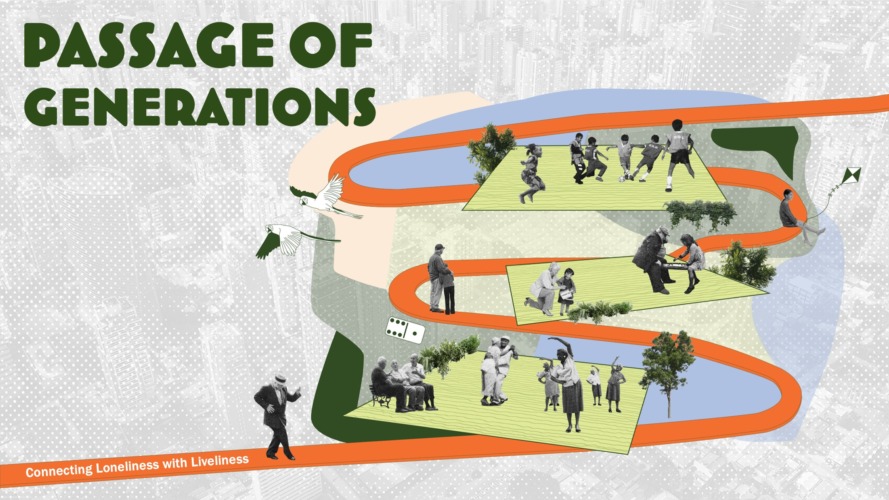
The intergenerational hub empowers children and older adults to be acknowledged, active, and independent within a shared, supportive space. It is a reminder to keep dreaming, to continue exploring, and to embrace the journey of learning, which never truly ends.

Public Learning House

Kevin Dsouza, Lubdha Kasekar , Swohm Chattopadhyay, Eric Alan
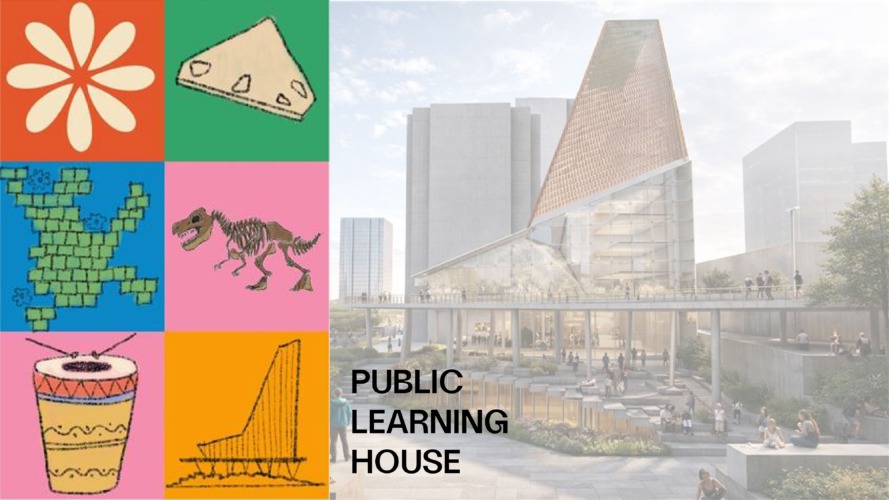
This school rejects fixed classrooms in favor of four thematic “Worlds” where students move by interest and project need. Learning happens through making and exchange with the community, creating a vertical commons where education flows both ways and functions as visible civic infrastructure embedded in daily urban life.

Pulso+

Trushna Agale, Pallavi Singla

Pulso+ is envisioned as the neighborhood’s living heart, where education energizes the community. Its architecture draws inspiration from the Rubik’s Cube, while interior spaces reflect the dynamic circulation and rhythm of the human heart.

Puxa Uma Cadera

Krishna Sai Raya, Chengyu Zhang, Cheshta Kela

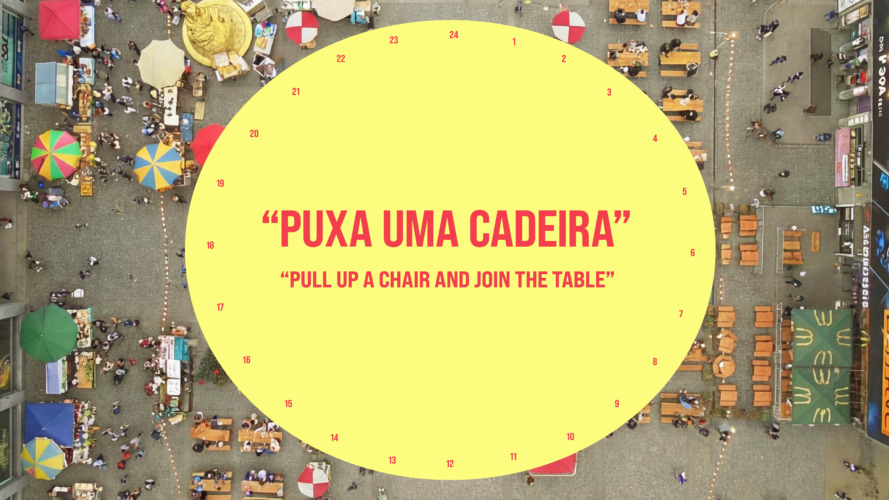
In a neighbourhood that has privatised its education, this school is the most public building on the street. Modelled on the boteca, it places the community inside the curriculum, dissolving the boundary between learning and living.

Raízes & Futuro

Soraya Hasbun, Andrea Orozco, Rebecca Quesnel Paladines, Ria Menon

A intergenerational STEAM campus and retirement community designed as an integrated ecosystem where learning, living, and culture drive lifelong education and regenerative urbanism.

Raízes Urbanas

Adam Grudgings, Una Bakovic, Megumu Ando, Tibor Babic

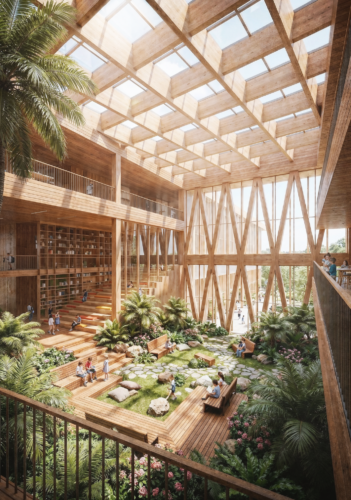
Raízes Urbanas is a biophilic vertical school that integrates nature, education, and community within a compact timber structure. Organised around a central atrium and layered outdoor learning spaces, the project connects students of all ages through a continuous landscape of classrooms, gardens, and shared spaces. By combining environmental education with hands-on green skills, it prepares graduates for future roles in the eco economy while redefining the school as a civic and ecological anchor within the city.

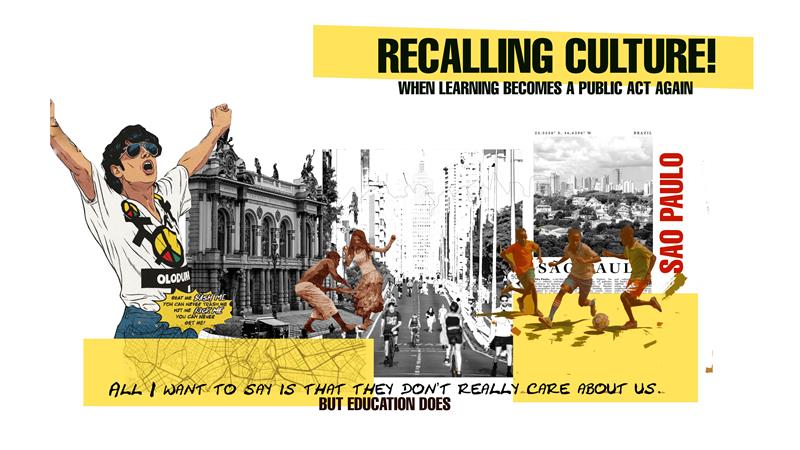
Recalling Culture: When Learning Becomes a Public Act Again

Malavika Jayan, Muskan Goyal, Jishnu M J, Safreena Roshan

This project turns learning into a public act—bringing culture back into education and making the city finally see, remember, and care.

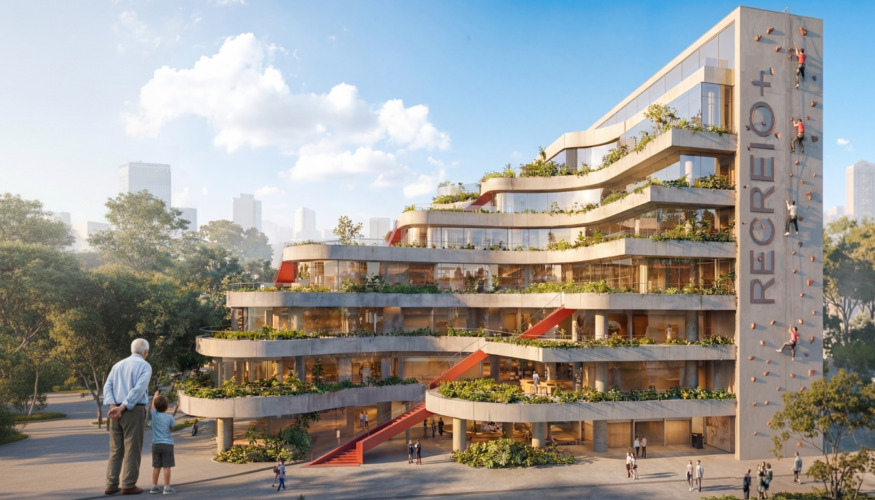
Recreio+

Mounir el Bitar, Ayla Tabbara, Nour Arabi, Carla Lteif

RECREIO+ is a vertical school where AI delivers knowledge and architecture builds humanity , each floor cultivating a capacity no algorithm can master. By day, students ascend through seven levels of becoming. By night, the building becomes shared ground, engineering encounters between generations in a city that forgot how to play, RECREIO remembers.

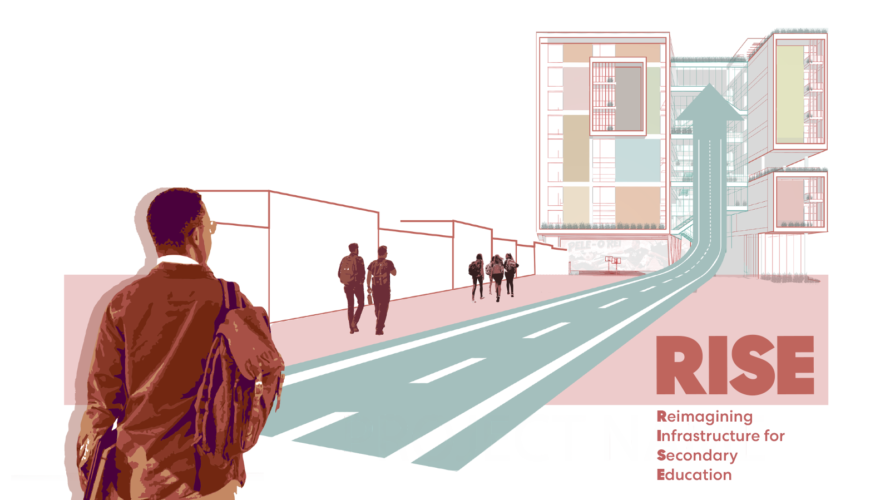
Rise

Morgan Clark, Tyler Littles, Adam Berkelhamer

In the heart of São Paulo’s financial district, the street is lifted into the sky, transforming a public high school into a Vertical Civic Landscape. Here, education becomes infrastructure—open, luminous, and shared—where the city and its students rise together.

Root to Canopy

Rand Zalzala, Aayushi Mody, Surabhi Dahivalkar, Leonie Dong
At its core, Learning+ democratizes innovation and access, bridging São Paulo’s wealth and historically marginalized communities through shared knowledge exchange. Immersive biophilic design reconnects students to light, air, ground, water, and warmth—creating architecture that restores stability, belonging, and a sense of return amid change.

Roots

Alex Syniukov, Ivan Hewitt, Enes Osmani

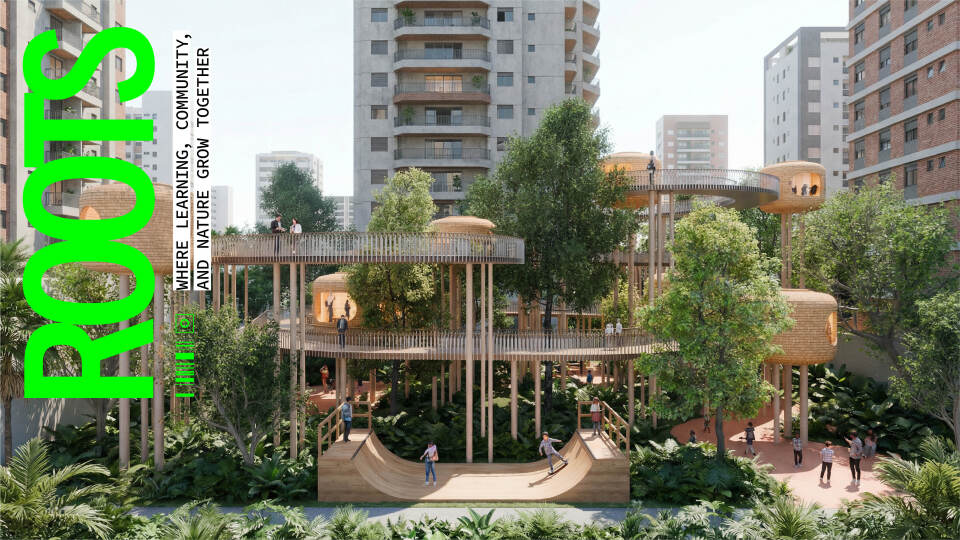
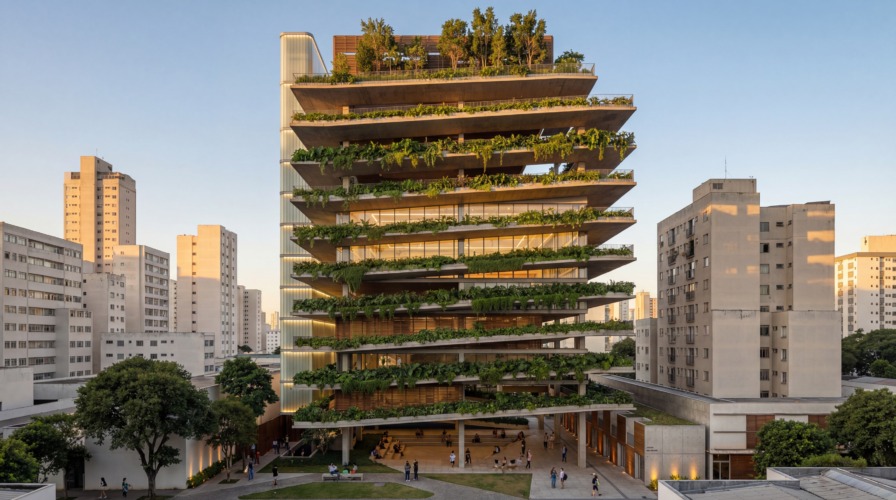
Root is a Learning+ centre where a civic canopy lifts classrooms into an urban forest, creating a school by day and a shared community landscape that promotes ecological awareness and stewardship.

Rush Hour Roulette

Lynn Salloukh, Tia Shehaitly, Yasmina Habli

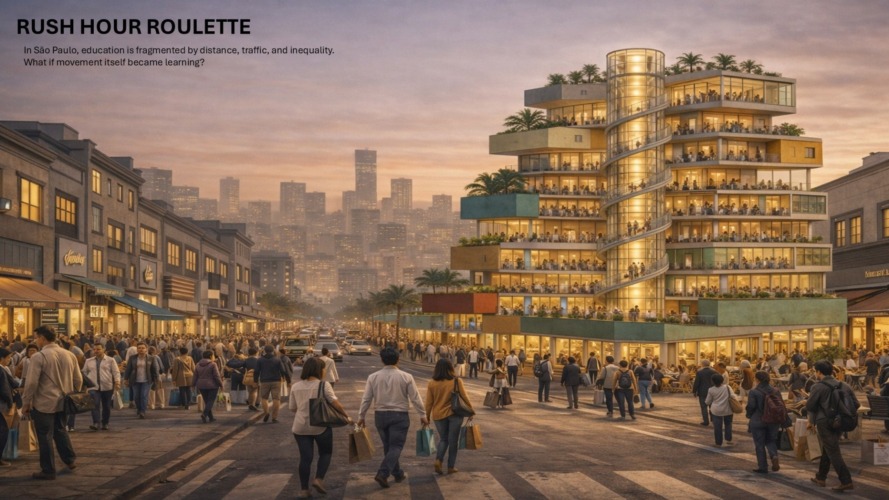
Educational fragmentation meets urban innovation. Our solution bridges the gap in São Paulo’s landscape, standing as a luminous community anchor that captures the energy of the street and converts it into a shared experience.

São Paulo Learning Stack

Shivam Gaharwal, Prajwal Shingane

Learning reimagined as civic infrastructure within the vertical fabric of São Paulo.

School of the City

Mazen Jubeihi, Ghalia Al Eses, Noor Al Hammouri, Mais AlMahadin

Reimaging the public school as an open civic infrastructure where circulation becomes pedagogy and outdoor spaces act as extensions of the classroom. Organizes around a central library core, adaptable learning spaces support academic, creative and vocational experiences that remain active beyond school hours.

Sensory Spine

Max Sopher, Ava Nourbaran, Ana Chighitashvili

In today’s landscape of artificial intelligence and environmental destruction, the places we educate future citizens require urgent rethinking. We propose a new model for the K-8 school rooted in sensory exploration.

SimCity

Karan Revankar, Angel Sebastian

The project proposes the school as São Paulo’s most public building: a vertical public school that compresses the density, diversity, and dynamism of the city into a single compact footprint. Rather than treating education as preparation for a narrow set of professions, the building reframes the school as a lived urban experience, where multiple possible futures coexist visibly and simultaneously.

Stacked Plus

Mostafa Zaky, Hazem Debes, Mohamed Youssif, Rahf Ibrahim

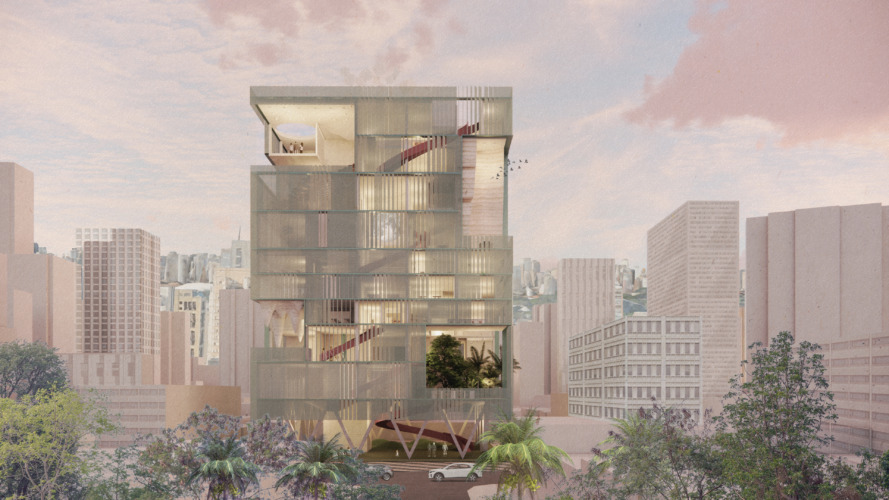
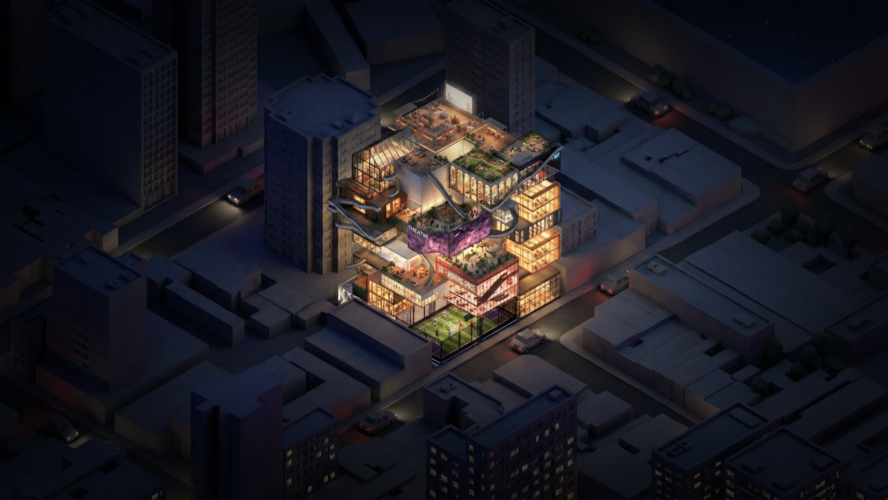
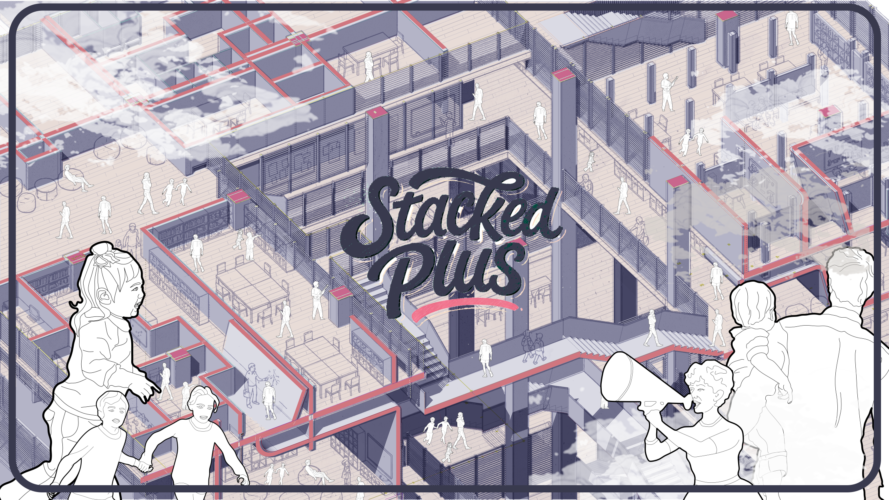
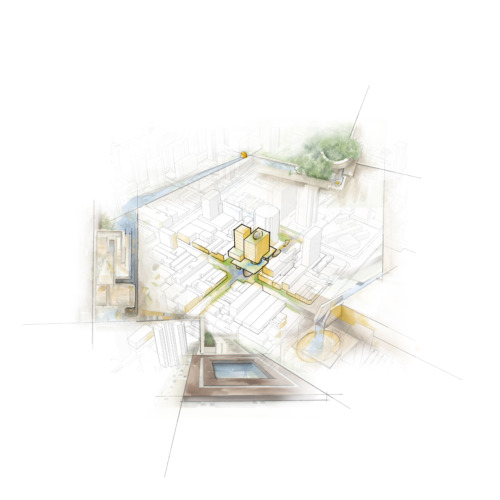
STACKED+ reimagines the public school as a vertical civic ecosystem where education, production, and community life are spatially interlocked. Through social condensation and a generative loop of interaction, making, and value creation, the building sustains learning while embedding resilience within the city.

Stream of Consciousness

Elise ZiliusAdam Liu, Stephen Marinelli, Derek Shin

Everything in life is temporary, and education has a responsibility to help future generations build resilience by embracing change thoughtfully rather than apathetically. This school uses nature, slowness, and intentional interaction to balance technological complexity, fostering patience, creativity, and the enduring exchange of knowledge across generations.

Syncopation

Emma DeMagistris, Chase Watts, Noelle Robinson

Syncopation frames education as an evolving rhythm—where joy, movement, and creativity inspire curiosity and action, and where architecture becomes an instrument for connection, adaptability, and shared discovery.

Taba

Adriano Alves, Thiago de Paula Nardelli, Petherson Santos

Education strengthens the community, and a structured community strengthens education.

Teddy, Our Street, Lifted!!!

Mohamed Ghanem, Omar Zahra, Rodaina Al-Azab
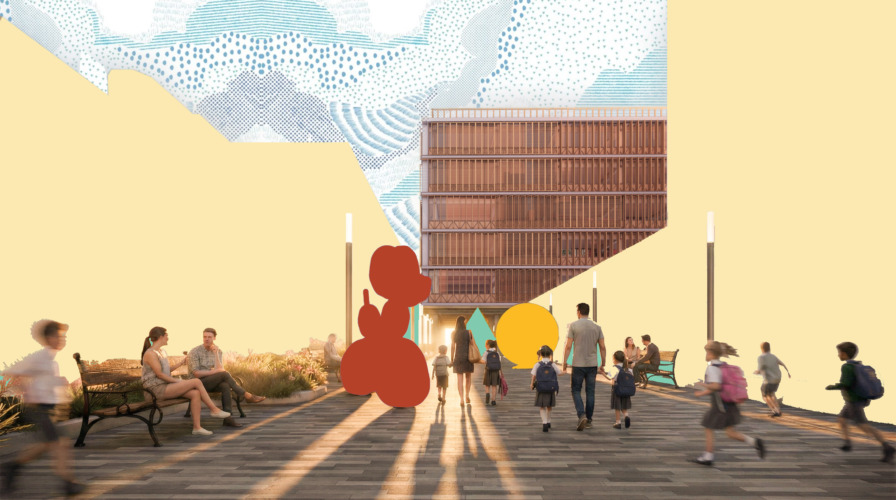
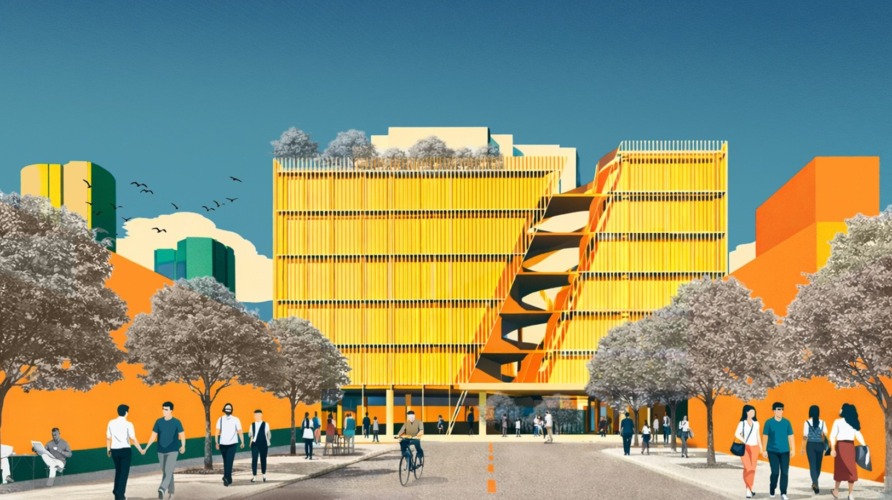
Teddy, Our Street, Lifted reimagines the public secondary school as vertical civic infrastructure in São Paulo. A carved diagonal void lifts the sidewalk into a public street, replacing corridors with terraces and shared platforms. Public by day and communal by night, the school becomes an open, ventilated, and continuously inhabited civic canyon.

The Brasilian Way

Viviane Pedruco, Dan Niemuth, Anna Helsel, Lyuba Tartova

The school becomes a civic hub in Itaim Bibi, where cultures, economies, and daily rhythms overlap — bringing people together the Brazilian way. By revealing inequality, embracing differences, and illuminating new possibilities, this urban anchor transforms diversity into collective strength and shared space into a foundation for social equity.

The Collective Way

Gustavo Cherubini, Gabriel Freitas, Henrique Blutaumuller, Fábio Jungstedt

Our project redefines education as a civic descent, where knowledge moves downward from a biophilic rooftop sanctuary into the shared life of the city. Through a continuous vertical spine of collective spaces, the school transforms learning into public infrastructure, shaping students into citizens at street level.

The Common Ground

Namratha Varma, Arnold benny

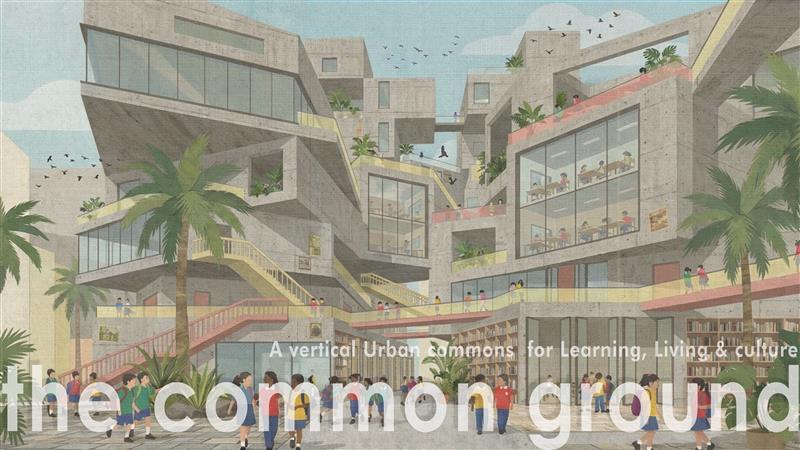
A vertical urban commons for learning, living and cultures.

The Cradle, an Urban Treehouse

Sanad Al Hmoud, Maroulla Shami

A neighborhood “Treehouse” concept that weaves together social, physical, educational, and civic functions. It creates a safe haven that strengthens identity and belonging within the city.

The Giving Tree

Reed Strawn, Harish Palani, Annika Olson, Faith McGown

The Architecture of Giving embodies a well of life rooted in its community, where reciprocity and civic generosity form the foundation. Human development and generational investment replace instruction, as vertical strata create an ecology of exposure where aspiration grows through shared experience.

The Knowledge Ladder

Onshi Ahuja, Anamika Gupta, Bhumika Joshi, Surbhi Taklikar
The Knowledge Ladder is a vertical learning and community ecosystem serving as a civic anchor in São Paulo. Through ramps, terraces, and green voids, movement becomes learning. Rooted in intergenerational exchange and climate‑responsive, adaptable design, it embeds curiosity, sustainability, and collaboration into everyday life—where every step is a learning moment.
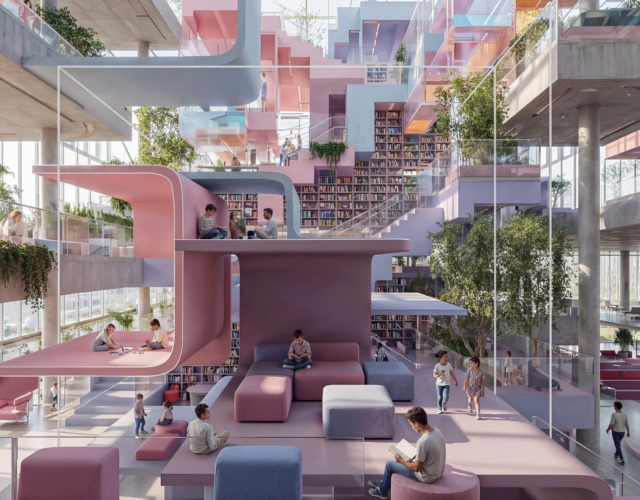
The Living School

Serena Lousich, Ann Salerno

The Living School reimagines a school as civic environmental infrastructure embedded within the climate, water, and ecological systems of Sao Paulo, Brazil. Built from adaptable environmental assemblies linked by a continuous civic ramp, the building itself becomes a curriculum; transforming movement, climate performance, and collective space into a shared tool for learning and public life – revealing the hidden processes that connect land, community, and city.

The Nautilus

Mark Tufenkji, Wissam Akiki, Jean Anthony Wakim, Ghazi Tawil

The Nautilus Public School

The Path

Thomas O'Shea, John Jewell, Cozy Bluhm

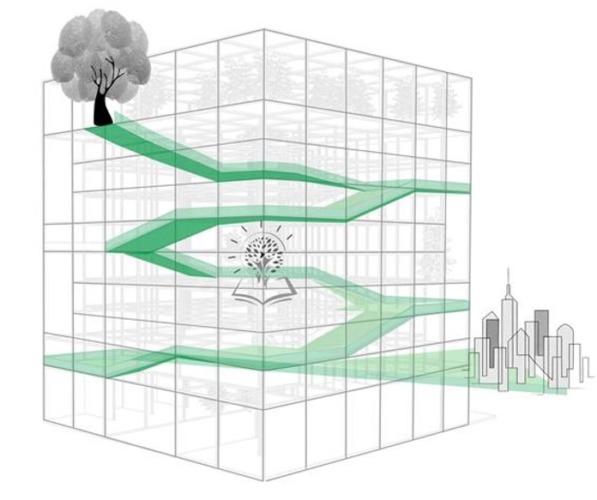
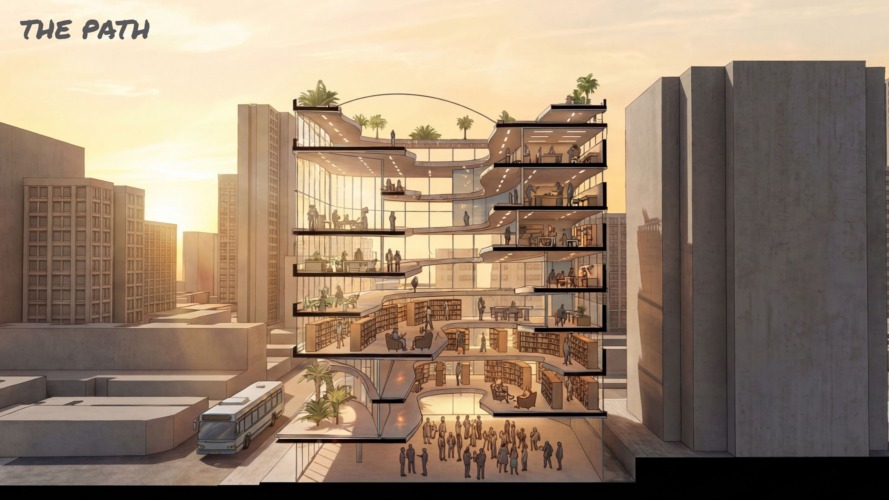
The path embraces both traditional academic learning and experiential learning as integral to the educational journey. A winding path ascends up the site flowing from one experience to the next, inviting students and the community to participate in all forms of learning: studying, eating together, creating, and playing.

The Turning Point: A Civic Algorithm

Habiba Shoukry, Shaimaa Emad

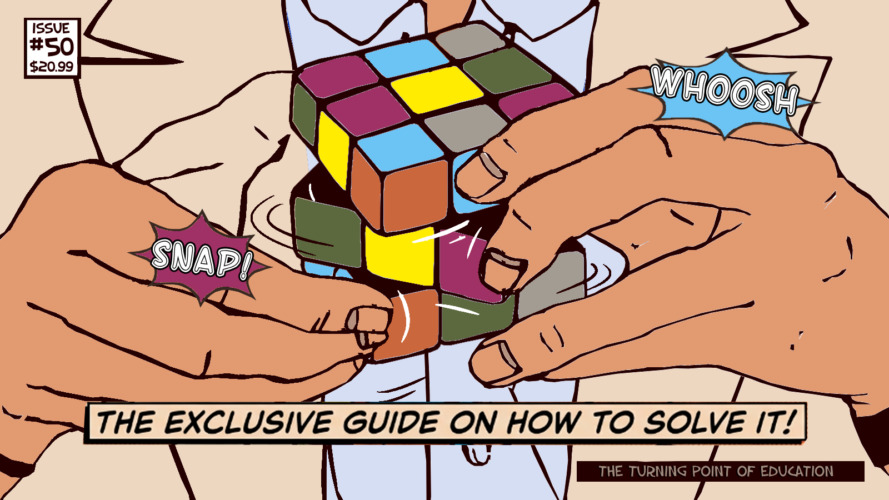
Reimagining education as a force for connection, this school becomes a civic anchor within a dense urban fabric. In a city where limited public space fragments social life, it opens beyond its classrooms to offer shared spaces for gathering, culture, and dialogue. By welcoming all generations, it transforms isolation into belonging, creating a neighborhood heart where learning and community life strengthen one another.

The Vertical Playground

Rosana Garcia-Rubio, John Roberts

The project proposes a vertical learning community that stacks public, shared, educational, and residential spaces while opening the ground level as an internal street that connects the school with the neighborhood. Inspired by Montessori principles, the building integrates terraces, gardens, and flexible learning environments to create an architecture that supports exploration, wellbeing, and community.

The Vertical SambArca

Sudarshanapandian j, Tuba Kulsum, Rajdeep Chakraborty, Lekha Gajbhiye
The Vertical SambArca reimagines the school as a rhythmic civic landscape, a vertical ecosystem where learning, culture, and public life intertwine.

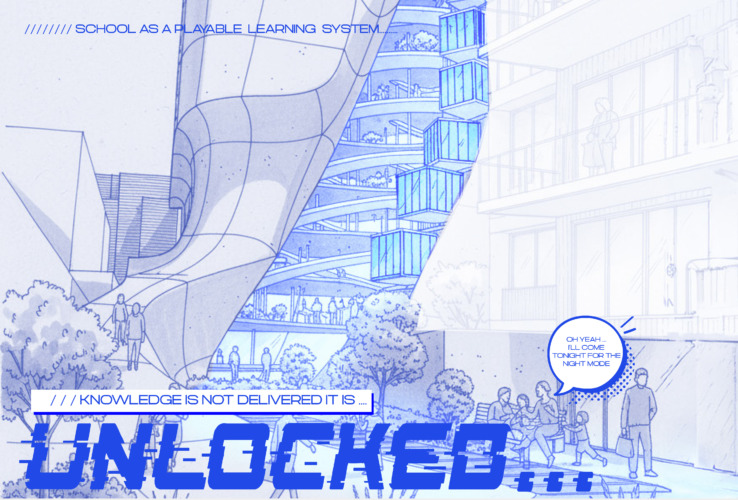
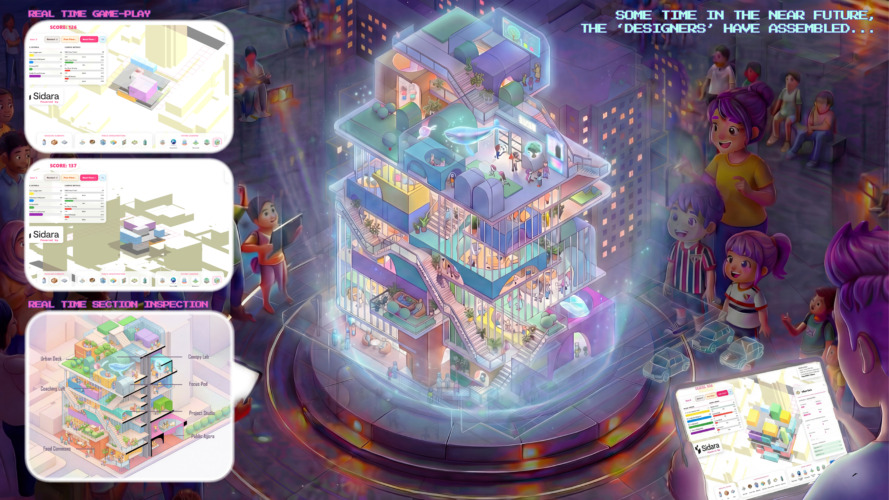
Unlocked

Ahmed Darwish, Ayman Elshaer, Basmala Elnady

School as a playable learning system. Every day is a new game and challenge.

V.I.V.A. Brazil

Stephanie Zaatar, Daniil Leover, Solan Kifle Horo, Sherif Abdelsalaam
V.I.V.A. (Vila Integrada Vertical de Aprendizagem) is a proposed school and civic space in Itaim Bibi, São Paulo, designed to combat youth isolation and support neurodiverse learners. Functioning as a vertical extension of the street, it blends focused learning with informal social spaces and opens its ground level for community life, fostering connection and belonging.

Vertical Gurukul

Shivam Agrawal, Aishwarya Divekar, Parishmrita Devi, Aparna Varma

Vertical Gurukul transforms education into a visible civic ecosystem, where learning, community, and production are vertically integrated within the city. The project redefines the school as public infrastructure blending ecology, economy, and pedagogy into a collective urban experience.

VertiPlay: Itaim Bibi

Doguscan Aladag, Barbar Fadel, Ali Munzer
This proposal introduces a platform‑agnostic design game that transforms community participation in Itaim Bibi into a democratic co‑design process. By converting program choices and public–private relationships into clear tradeoffs, the game reveals collective priorities and produces an evidence‑based brief for developing a vertical school as civic infrastructure. A prototype of the game is accessible through the link: https://www.seeles.ai/play/c7424c3c-1d66-43af-b712-88f7bdc82746

Vinha de Arborea

Nadine Saade, Nabil Allam, Joseph El Kozah

Bio-Hive Academy: The organic rise to learning.
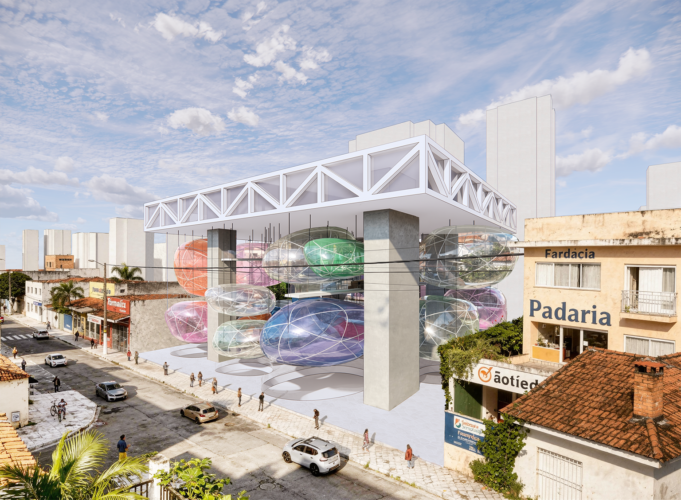
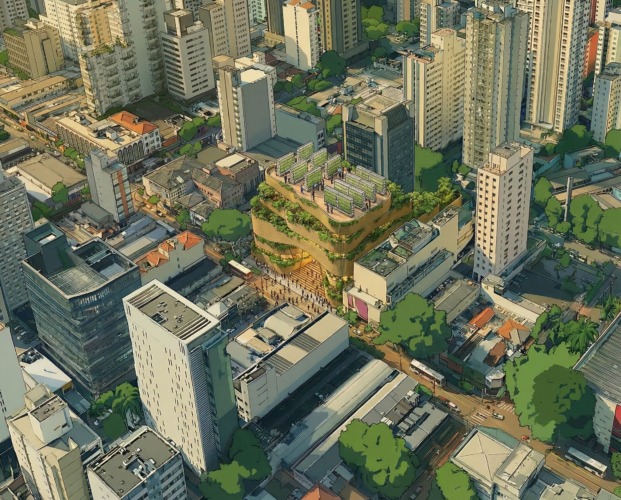
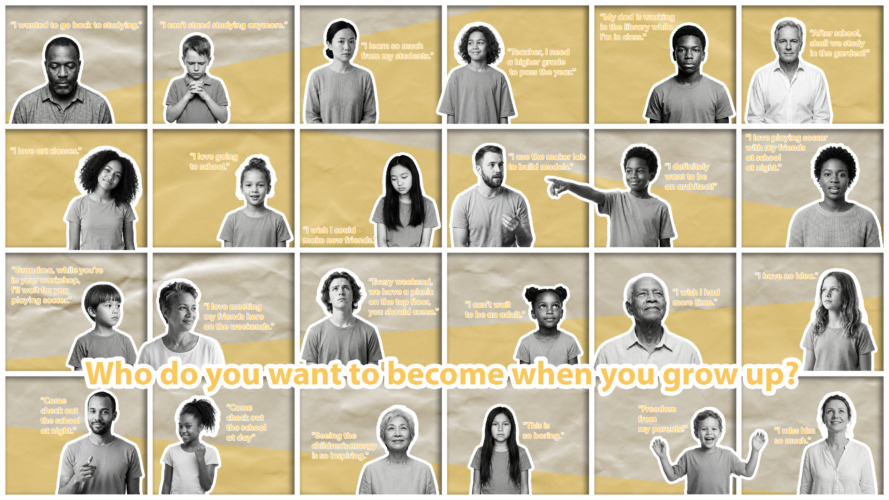
Who do you want to become when you grow up?

Isabela Granado, Bruno Faraco D'Aprile, Pedro Gegunes, Fernando Holanda
The Itaim Bibi Sharing+School redefines education as civic infrastructure embedded in everyday urban life. Opening its spaces beyond school hours, the building connects students, residents, and workers through shared programs and a peripheral ramp that extends the sidewalk vertically, transforming movement, visibility, and learning into a collective civic experience.
Wisdom & Wonder

Mohd Altaher Al Aeffi, Ibrahim Mreizeeq, Maria Shahatit
In dense São Paulo, this project addresses loneliness by creating an intergenerational civic school where elders and children learn together. Through project‑based education, shared workshops, and integrated health clinics, architecture transforms the city into a classroom—fostering connection, care, and collective wisdom across generations.

WonderLoop

Nadia Zamel, Amr Hatem, Rawan Hossam, Mohamed Hamed Helal
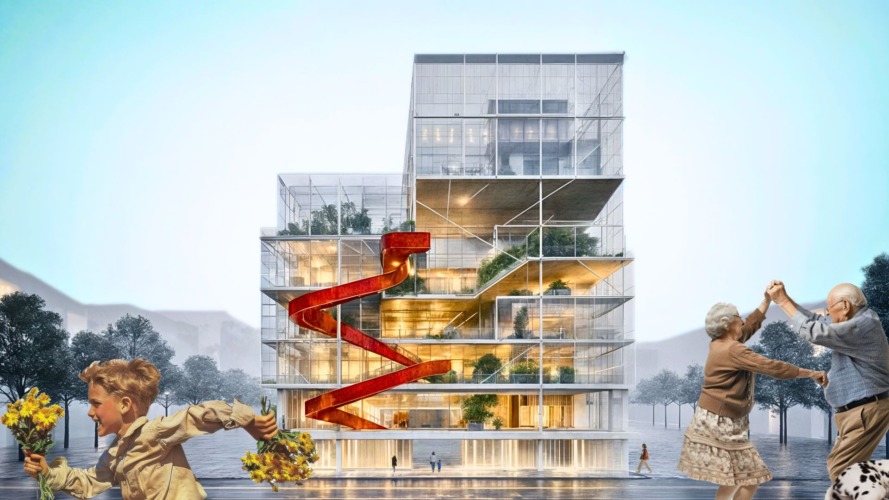
“WonderLoop” reimagines education as movement, not confinement. Anchored by a central helix ramp, the school becomes a continuous public learning journey that blends cultural, civic, and educational spaces, transforming rigid classrooms into an open, playful environment that supports exploration, community interaction, and collective learning while acting as a vibrant urban landmark.

Zip it Up!

Madhumitha G, Johanna Lydia GFS

We’ve reimagined the learning space that caters to different age groups and their mental needs providing learning spaces they can go to and explore deep on the topics that interests them more than the others.